Iran and the United States could sign an agreement to end their war and reopen the Strait of Hormuz as soon as this weekend, mediators and officials said Saturday, after Pakistan, a key mediator, said a "final, agreed upon text" of a deal had been reached — even as U.S. forces shot down several Iranian drones over the strait early Saturday, and Tehran cautioned that details could still change.
Pakistan's prime minister said Saturday the two sides were closer to a deal than ever, adding that finalization was likely within the next 24 hours and that Pakistan was preparing for an electronic signing immediately afterward, followed by technical-level talks next week. President Trump said he believed a deal could be signed over the weekend or Monday, while disputing what he called false information from Tehran about its contents.
A senior U.S. administration official said both sides had agreed on a text and that Washington expected to sign an initial deal in the coming days. A Western source said it could be signed as soon as Sunday by U.S. Vice President JD Vance and Iran's parliament speaker, Mohammad Baqer Qalibaf, with Geneva seen as the likeliest venue, though Iran's foreign minister said the deal would be signed remotely before any announcement.
The terms remained contested even as the timeline tightened. Draft terms call for the U.S. to begin releasing billions of dollars in frozen Iranian assets and to waive sanctions on Iran's oil exports in return for reopening the strait, with Iran's nuclear program to be addressed during a 60-day period of talks. But the two sides' accounts diverged on the core issues: a U.S. official said the deal would reopen the strait, lift the blockade and lead to the dismantling of Iran's nuclear program, while Iranian state media said the current draft made no commitment on the nuclear program or on control of the Strait of Hormuz, whose future administration would be decided jointly by Iran and Oman with no American role. Iran's foreign minister said changes were still possible and declared, "Iran is the winner of the war with the US." Israel's prime minister said his country would not be a party to the agreement.
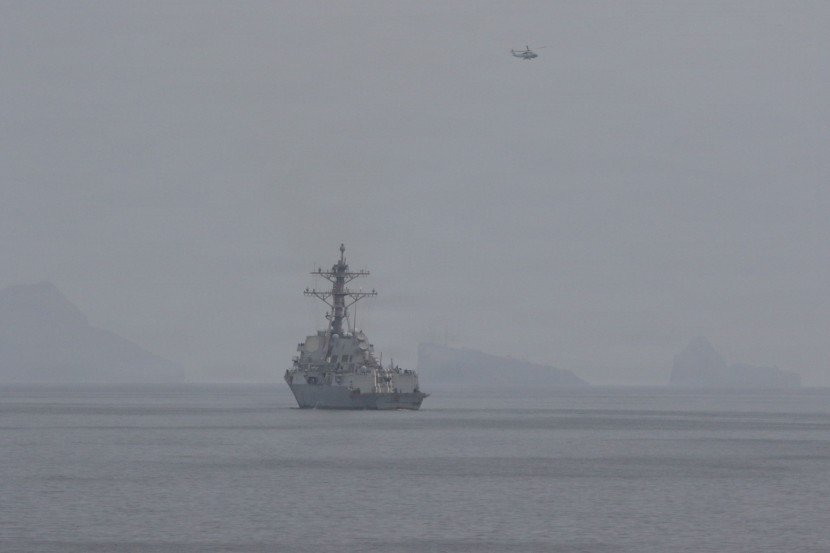
The diplomatic signals came even as fighting persisted. U.S. forces shot down several Iranian one-way attack drones over the Strait of Hormuz early Saturday, with the drones apparently targeting commercial ships; Trump called the strike "totally unacceptable." Earlier in the week, India's government said three Indian nationals were killed when U.S. forces fired on a Palau-flagged tanker off the coast of Oman — the first confirmed deaths in the maritime campaign — after Washington intensified a naval blockade around the waterway.
The war has already cost Iran its leader. Ayatollah Ali Khamenei, who ruled the Islamic Republic for more than three decades, was killed at age 86 in U.S. and Israeli strikes on Feb. 28, the first day of the conflict. After an initial state funeral was postponed in anticipation of huge crowds, Iranian state media said Saturday that the funeral would now begin in Tehran on July 4 and conclude with his burial in the northeastern city of Mashhad on July 9.
Markets, meanwhile, priced in the prospect of an end to the war. U.S. crude futures for July delivery closed Friday under $85 a barrel, down nearly 4% on the day and among the lowest levels since the war began, while the international benchmark traded just under $87 for August delivery; the contract had peaked above $110 in April.
The apparent move toward de-escalation followed a day of whiplash on Thursday, when Trump threatened to seize Kharg Island, which handles roughly 90% of Iran's crude exports, before canceling planned strikes and declaring the war over. The swings capped an escalation that began earlier in the week, when the U.S. struck Iran for two consecutive nights. U.S. Central Command said those strikes hit military surveillance, communication systems and air defense sites, and were a response to "Iran's unwarranted and continued aggression."
Iran answered with force. Its Islamic Revolutionary Guard Corps said it launched counterattacks on 18 U.S. military targets at airbases in Kuwait and Bahrain, and Iran's joint military command declared the Strait of Hormuz closed to all marine traffic, warning it would fire on any vessel attempting to pass. There were no immediate reports of casualties at the Gulf bases, which had intercepted earlier rounds of fire. The exchange traced to the downing of a U.S. Army Apache helicopter near the strait early in the week, which Trump blamed on Iran.
Diplomatic efforts had continued in parallel throughout. A Qatari negotiating team traveled to Tehran, and the U.N. nuclear watchdog's board approved a U.S.-backed resolution demanding Iran declare its enriched uranium stockpile and admit inspectors. The 2026 Iran war began Feb. 28 after nuclear talks collapsed, and an April 8 ceasefire had since frayed.
Updated June 13, 2026, 9:10 a.m. ET. This is a developing story.
© 2026 HNGN, All rights reserved. Do not reproduce without permission.


