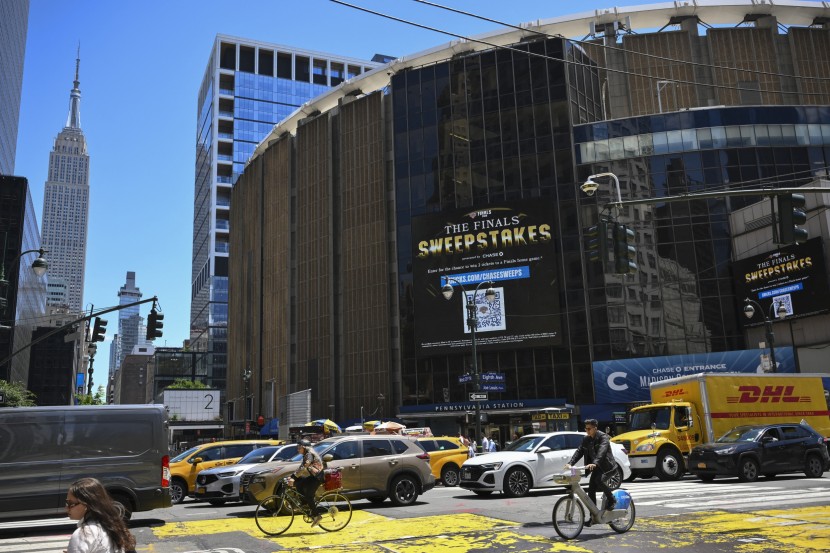
NEW YORK — The New York Knicks are one win away from their first NBA championship since 1973, and the chase is rippling far beyond the court — into city storefronts, hotel rooms and a resale ticket market that has lurched by tens of thousands of dollars from one game to the next.
Holding a 3-1 series lead over the San Antonio Spurs, the Knicks can close out the title as soon as Saturday's Game 5 in San Antonio. The mere prospect has turned Madison Square Garden, which had not hosted a Finals game in 27 years, into one of the hottest tickets in sports.
The economic stakes for the city are substantial. New York's mayor's office estimated that the team's postseason home games could generate up to $832 million for local businesses, and said the run had already produced about $195 million through tickets, concessions, merchandise, transit and lodging. Sports economists say the windfall is concentrated heavily in the team itself: on the primary ticket market, the home team keeps roughly 75% of revenue while the league takes the remaining 25%, and secondary-market platforms collect sizable fees on every resold seat.
For Madison Square Garden Sports Corp., the parent company of the Knicks, the math is favorable. Analysts estimate each playoff home game delivers on the order of $5 million in profit, with the added staffing and maintenance costs of hosting extra games shrinking to almost nothing as a share of sales once prices climb this high. One estimate pegged the playoff windfall at roughly $45 million over the course of the run.
What has set this series apart is the volatility. When the Knicks took a 2-0 lead, fans anticipated a title celebration on home soil, and the cheapest "get-in" price for a potential clinching Game 4 soared past $13,000. After the Knicks dropped Game 3 at the Garden, the chance of clinching at home evaporated and that same Game 4 get-in price collapsed to around $3,400 — a four-day drop of roughly $10,000, larger than the swings tracked for recent Super Bowls or a Taylor Swift concert. The cheapest seats for Game 3 itself had still run close to $4,000, with averages topping $7,000, ranking it among the most expensive Finals games on record. On some trackers, the Garden's Finals games priced higher than nearly every Super Bowl on record.
The price swings reflect a simple supply-and-demand squeeze. Madison Square Garden's seating capacity of roughly 19,800 has barely changed since the Knicks last won it all, while the pool of fans able to bid for a seat — and reach the resale market online — has expanded enormously. Analysts noted that a large share of buyers for the San Antonio games came from the New York area, underscoring how far fans will travel and spend to witness a title.
The next test comes Saturday in San Antonio, where a Knicks win would end the series. Should the Spurs extend it, the Finals would return to Madison Square Garden for a Game 6 — and with a championship potentially on the line at home, resale prices that briefly cooled would be expected to surge again. As of midweek, the cheapest Game 6 seats were already listed above $9,000.
For a franchise and a fan base that have waited more than half a century, the financial frenzy is its own kind of scoreboard — one that rises and falls with every result.
© 2026 HNGN, All rights reserved. Do not reproduce without permission.