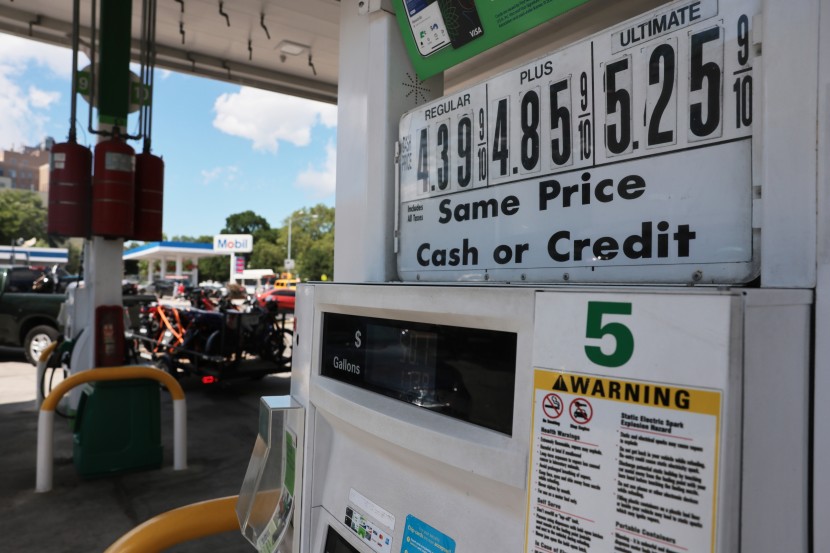
U.S. drivers could see more relief at the gas pump if a potential agreement between the United States and Iran leads to the reopening of the Strait of Hormuz and a broader easing of pressure on global oil markets.
The national average price for a gallon of regular gasoline stood at $4.108 on Friday, according to AAA, down from $4.129 a day earlier, $4.220 a week ago and $4.504 a month ago. The decline marks a rare stretch of relief during the busy summer travel season, when fuel prices often remain elevated because of stronger driving demand.
The recent drop has coincided with a sharp pullback in crude oil prices as traders respond to signs of possible diplomatic progress between Washington and Tehran. Brent crude, the global oil benchmark, fell to around $88 a barrel Friday, while U.S. West Texas Intermediate crude traded near $85, according to Reuters.
The shift follows weeks of volatility caused by the Iran war and the closure of the Strait of Hormuz, one of the world's most important energy chokepoints. The narrow waterway handles a major share of global oil and liquefied natural gas shipments, making any disruption a direct concern for energy markets and consumers.
Gasoline prices do not move in perfect lockstep with crude oil, but oil remains the largest component of retail fuel costs. If crude prices continue to fall and supply concerns ease, pump prices could decline further in the coming days and weeks.
AAA said this week that the national average has fallen for three straight weeks, dropping from $4.56 on May 21 to about $4.12 as crude prices remained below $100 a barrel. The group said pump prices remain at four-year highs, but are still well below the record national average of more than $5 a gallon reached in June 2022.
The outlook remains uncertain.
A potential U.S.-Iran agreement could reopen the Strait of Hormuz and restore confidence in energy shipping routes, but officials have not announced a final deal. Iranian state media has reported possible terms for a framework agreement, while Iranian officials have cautioned that timing and location details remain speculative.
Energy markets have responded quickly to each new signal. Oil prices fell after President Donald Trump said he had called off planned strikes and suggested a deal with Iran was close. Prices later pared some of their losses as investors weighed whether any agreement would be finalized and how quickly oil flows could return to normal.
Analysts have warned that fuel markets could remain volatile even if the diplomatic outlook improves. The U.S. Energy Information Administration has said that full restoration of oil flows through the Strait of Hormuz could take time even after the conflict ends, keeping fuel prices vulnerable to renewed swings.
For consumers, the immediate question is whether the recent drop in gasoline prices continues into the heart of summer travel season. A sustained decline in crude oil prices could ease pressure on household budgets, airline costs and broader inflation. But any setback in talks, renewed military action or delay in restoring Gulf shipments could reverse those gains quickly.
For now, the pump-price trend is moving in a favorable direction for U.S. drivers. Whether that relief lasts may depend on whether diplomacy can turn lower oil prices into a more stable energy market.
© 2026 HNGN, All rights reserved. Do not reproduce without permission.


