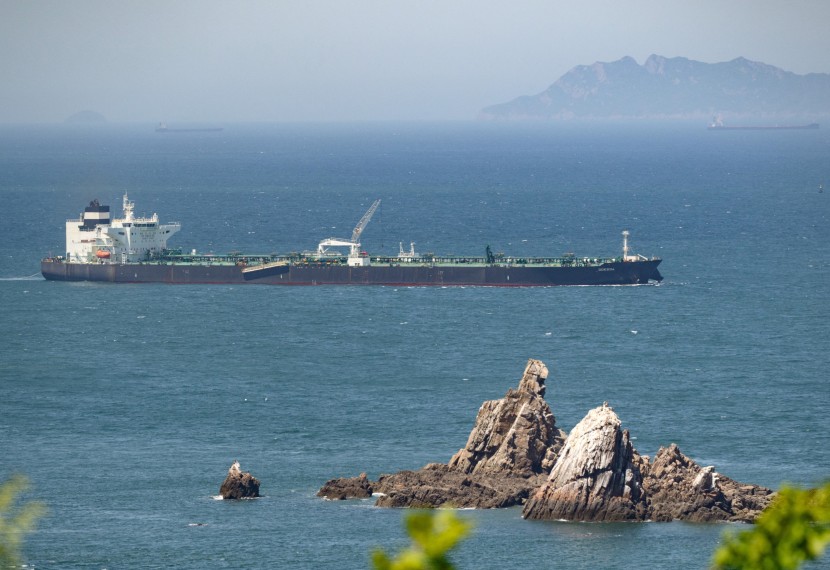
The World Bank lowered its forecast for global economic growth this year to a post-pandemic low on Thursday, pointing to higher energy prices and deepening uncertainty caused by the Iran war.
In its Global Economic Prospects report, the bank said worldwide growth is now expected to slow to 2.5% in 2026, down from 2.9% a year earlier, with headline inflation averaging about 4%. The downgrade reflects the economic shock from a conflict that has sent oil prices sharply higher since fighting began in late February.
Iran responded to U.S. and Israeli attacks by closing the Strait of Hormuz, through which roughly a fifth of the world's oil and natural gas passes, and energy prices climbed steeply. The World Bank now expects the benchmark Brent crude price to average $94 a barrel this year — up about 36% from 2025 and 50% higher than the bank had projected in January. That figure is an average for the year, and near-term prices have swung violently with the conflict. On Thursday, oil fell sharply — Brent settled down nearly 3% at about $90 a barrel, while U.S. crude closed under $88 — after President Donald Trump signaled a deal with Iran could be near.
Developing and emerging-market economies are bearing the brunt. The bank cut its 2026 growth forecast for those countries by 0.4 percentage points to 3.6%, saying the disruption to energy supplies and the sharp rise in prices had dampened confidence and weakened activity. Some of the steepest downgrades fell on energy-importing and Gulf-exposed economies, including the United Arab Emirates, Saudi Arabia, Turkey and Bangladesh.
The United States was spared a downgrade. The bank still expects the world's largest economy to grow 2.2% this year, unchanged from January, noting that as a major energy producer it is more resilient than oil-importing nations and is benefiting from tax cuts and heavy investment in artificial intelligence. Even so, American households continue to feel the strain of higher gasoline and other prices.
The bank said it was making up to $60 billion immediately available to the developing countries hit hardest by the crisis, a figure that could rise to $100 billion over 15 months. "We are providing liquidity where it is needed now," said World Bank President Ajay Banga, adding that the institution was ready with additional financing and guarantees "if pressures deepen."
The war has also disrupted trade in fertilizer, much of which is shipped through the Persian Gulf, raising the risk of food shortages if farmers cut back to avoid higher costs. The bank's chief economist, Indermit Gill, framed the conflict as the latest in a series of shocks — from the pandemic to Russia's invasion of Ukraine to trade tensions — that have eroded the resilience of economies worldwide.
The forecast rests on an assumption that the worst of the energy disruptions ease by July. If they prove more severe and rattle financial markets, the bank warned, global growth could fall as low as 1.3%. The outlook remained clouded on Thursday as tensions swung sharply, with Trump threatening to seize Iran's main oil-export hub before later saying he had canceled planned strikes — comments that helped pull oil prices lower.
© 2026 HNGN, All rights reserved. Do not reproduce without permission.