Elon Musk has taken another audacious step in reshaping the future of technology by officially merging SpaceX with his artificial intelligence company, xAI. The business tycoon aims to integrate AI with space innovation within a single firm.
The move signals a dramatic expansion of SpaceX's mission. No longer just a space launch provider, the company now positions itself at the center of the global race to scale artificial intelligence both on Earth and beyond.
Why AI and Space Are Now Inseparable
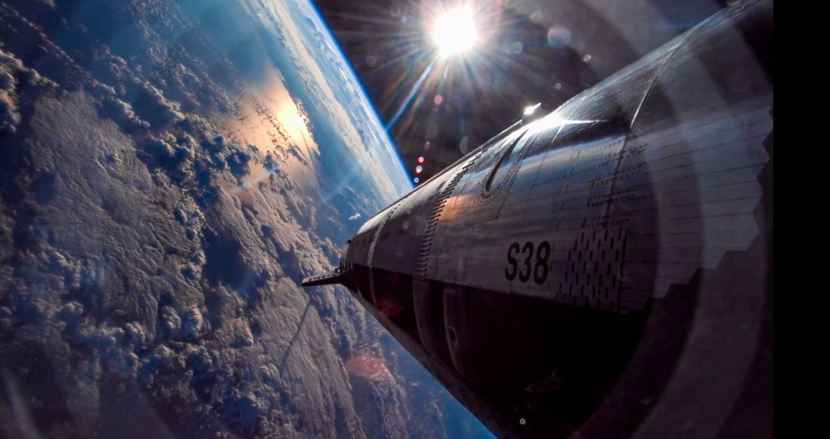
The consolidation creates what Musk calls a "most ambitious, vertically integrated innovation engine," combining AI development, rocket technology, satellite internet, and real-time global communications under one umbrella.
At first glance, merging a rocket company with an AI startup may seem unconventional. Musk argues otherwise. According to Musk, Earth-based infrastructure cannot support AI's rapidly growing energy demands.
Data centers already consume massive amounts of power, and that demand is expected to skyrocket as AI models become larger and more complex.
Musk believes the solution lies in space. By moving AI infrastructure off-world, SpaceX can bypass terrestrial energy constraints while unlocking near-limitless solar power. This philosophy underpins the merger and explains why AI now sits at the core of SpaceX's long-term strategy.
Orbital Data Centers
Just days before the merger announcement, SpaceX filed documentation with the FCC seeking approval to launch up to one million satellites. These satellites would form the backbone of an orbital data center network, essentially AI supercomputers in space.
Musk claims these orbital systems could revolutionize global communications, reduce pressure on Earth's power grids, and dramatically accelerate deep-space exploration. Space-based computing could also provide faster, more resilient AI processing for applications ranging from defense to climate monitoring and autonomous systems.
Funding the Moon, Mars, and Beyond
Engadget reported that Musk has long tied his AI and space ambitions to human expansion beyond Earth. He suggests that revenue generated from orbital data centers could fund self-sustaining Moon bases and, eventually, permanent human settlements on Mars.
In this vision, AI does more than optimize systems; it becomes the financial and technological engine enabling humanity's multi-planetary future. The merger aligns SpaceX's commercial success directly with Musk's long-standing interplanetary goals.
Familiar Musk Playbook
This consolidation follows a pattern Musk has used before. He previously merged xAI with X, integrating artificial intelligence into the social media platform's core operations. Tesla has also invested $2 billion into xAI.
Each move strengthens cross-company data sharing, AI training, and infrastructure leverage, creating an interconnected empire where progress in one company accelerates growth in the others.
SpaceX IPO?
SpaceX is reportedly preparing for an IPO later this year. This could push the company to over $1 trillion, and the timing appears deliberate. Absorbing xAI transforms SpaceX into a foundational technology company, not just a spaceflight firm.
The SpaceX IPO possibility was first reported by Tech Times in 2017.
Originally published on Tech Times


