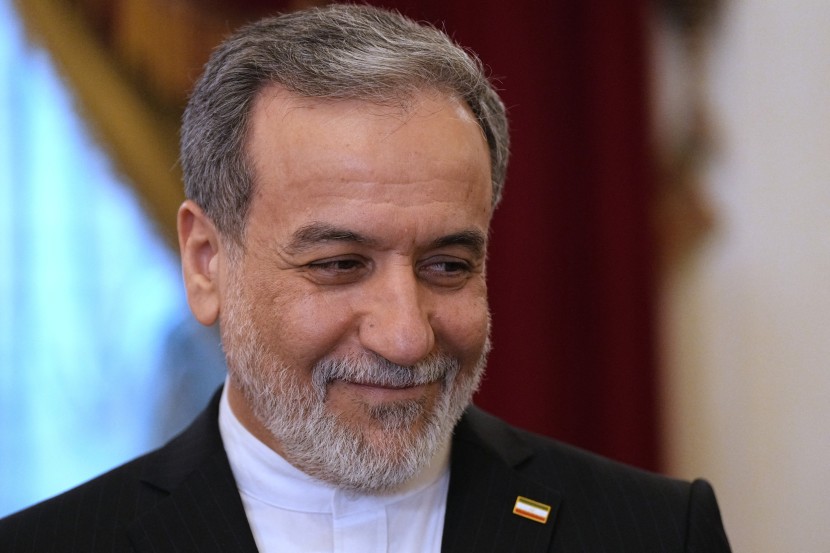
As the United States and Iran moved toward signing an agreement to end their war and reopen the Strait of Hormuz, a vocal bloc of hardliners inside Iran rallied against the deal, directing their anger at the officials who negotiated it.
Protesters gathered in Tehran and Mashhad on Saturday, chanting against Foreign Minister Abbas Araghchi and Parliament Speaker Mohammad Bagher Ghalibaf, who heads Iran's negotiating team. Demonstrators accused the two of conceding too much to Washington, with some invoking the killing of the country's former supreme leader. Footage circulated by media affiliated with the Islamic Revolutionary Guard Corps showed a gathering outside the Foreign Ministry's representative office in Mashhad, where protesters denounced Araghchi as a compromiser.
The backlash has been building for days. Several Friday prayer leaders warned against any agreement with Washington. In Mashhad, the prayer leader said no understanding would be acceptable without the approval of Iran's new supreme leader, Mojtaba Khamenei. Hardline lawmakers and commentators have argued that the reported terms amount to a retreat, pointing to U.S. statements that the deal would require Iran to dismantle its nuclear program, remove or destroy enriched uranium, accept long-term inspections, and stop funding armed proxy groups.
The hardline faction, which gained influence through large street rallies during the war, has emerged as a significant pressure point on Iran's leadership. One lawmaker who had been part of the negotiating team in Pakistan later called negotiating over the nuclear program a strategic mistake and pushed for Araghchi's removal.
The protests underscore the domestic risk facing Iran's leaders as they weigh a deal. Araghchi has said the memorandum would be signed remotely if the final stage of talks is completed, and that Iran would return to war if its terms were not honored. U.S. officials and mediator Pakistan have said the document could be signed as soon as Sunday.
The conflict has reshaped Iran's leadership. Ayatollah Ali Khamenei, who led the country for more than three decades, was killed on the first day of the war in February and was succeeded by his son, Mojtaba, who has rarely appeared in public since.
This is a developing story.
© 2026 HNGN, All rights reserved. Do not reproduce without permission.