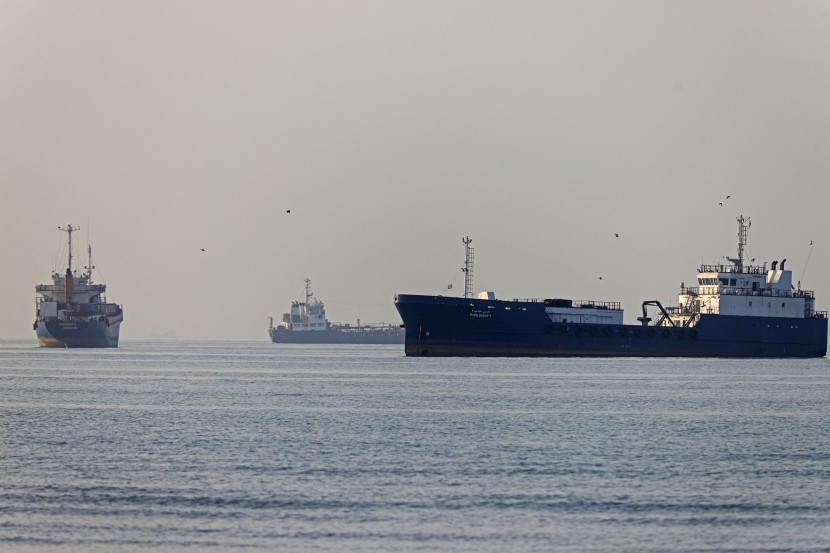
The United States and Iran have reached a deal to end their war, President Trump and Pakistani Prime Minister Shehbaz Sharif announced Sunday, with Trump ordering an end to the U.S. naval blockade and the reopening of the Strait of Hormuz.
Sharif, whose country was a key mediator, said the two sides had declared "the immediate and permanent termination of military operations on all fronts, including in Lebanon." He said a formal signing ceremony would be held Friday, June 19, in Switzerland, and that mediators would facilitate preparatory meetings during the week. Iran's deputy foreign minister confirmed that the text of an agreement had been finalized and would be signed Friday, according to Iranian state media.
In a post on Truth Social, Trump declared that the deal "is now complete" and authorized the reopening of the strait and the withdrawal of the blockade. "I hereby fully authorize the toll free opening of the Strait of Hormuz, and, simultaneously herewith, authorize the immediate removal of the United States Naval blockade," he wrote, adding, "Ships of the World, start your engines. Let the oil flow!"
The full terms were not released. According to accounts of the agreement, Iran would reopen the strait while the United States lifted its blockade and released billions of dollars in frozen Iranian assets, with Iran accepting limits on its nuclear program and a phased process tied to compliance. Earlier drafts described by Iranian state media outlined the release of about $24 billion to $25 billion in frozen funds and a staggered, performance-based structure, though Trump had disputed some Iranian characterizations of the terms.
The announcement was complicated by renewed fighting in Lebanon. Israel struck a southern suburb of Beirut that it described as a Hezbollah command center, drawing a sharp response from Iran's chief negotiator and parliament speaker, Mohammad Bagher Qalibaf. It was not immediately clear whether Israel, which has said it would not be a party to the agreement, had agreed to halt its operations in Lebanon. Iranian hardliners had also rallied against the deal in recent days, accusing the negotiating team of conceding too much.
The agreement, if signed, would mark the end of a war that began Feb. 28, when U.S. and Israeli strikes killed Iran's supreme leader, Ayatollah Ali Khamenei, who was succeeded by his son, Mojtaba. The conflict disrupted shipping through the Strait of Hormuz, a vital route for the world's oil and gas, and drove up energy and consumer prices well beyond the region.
This is a developing story.
© 2026 HNGN, All rights reserved. Do not reproduce without permission.


