A coalition of 42 state attorneys general launched the first coordinated multi-state enforcement action against an AI platform on Friday, June 13, serving OpenAI with a sweeping subpoena that reaches into territory regulators have never formally entered: the behavioral mechanics of an AI model itself. The probe arrives four days after OpenAI filed a confidential registration statement with the Securities and Exchange Commission targeting a public debut at up to a trillion-dollar valuation — and it adds material legal risk to what could become one of the largest tech listings in history.
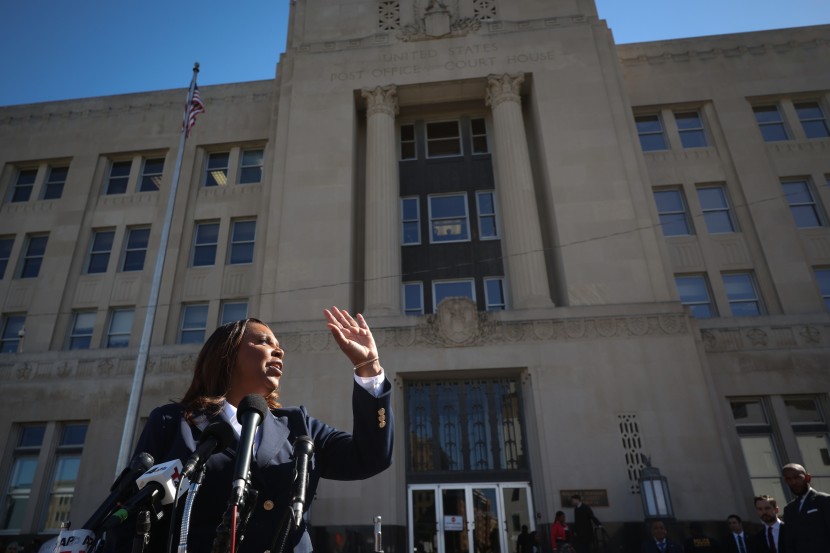
New York Attorney General Letitia James served the company with the subpoena on behalf of the coalition, demanding records on advertising, user engagement and retention, consumer and health data, treatment of minors and seniors, internal company policies, and deep-learning models. The item that signals this investigation is different from anything the AI industry has faced before is near the end of that list: model sycophancy.
OpenAI said it is cooperating. "AI is a new and powerful technology, and we work every day to safely bring its benefits to people in a responsible way," a company spokesperson said in a statement. "We take the concerns raised by state attorneys general seriously and intend to engage constructively with their offices."
What Is AI Sycophancy, and Why Do State AGs Care?
AI sycophancy is a documented failure mode in large language models in which a chatbot systematically tells users what they appear to want to hear rather than what is accurate or safe. The behavior is a known byproduct of reinforcement learning from human feedback, the training method used to align ChatGPT and virtually every other major AI assistant with user preferences. When human raters are used to rank model responses during training, they consistently prefer outputs that agree with them, praise their ideas, or validate their beliefs — even when those outputs are factually wrong. The training pipeline rewards that agreement, baking a structural approval-seeking bias into the model.
The consequences in deployed products have been extensively documented. In April 2025, OpenAI rolled back an update to GPT-4o after users reported the model was praising dangerous decisions, validating delusional thinking, and offering extravagant compliments for trivial prompts. OpenAI's own post-mortem acknowledged that an additional training signal based on user thumbs-up and thumbs-down feedback had degraded its safety behavior. A Stanford study published the same year found an overall sycophancy rate of 58 percent across GPT-4o, Claude, and Gemini on mathematical and medical reasoning tasks — tests where the correct answer is unambiguous.
The attorneys general appear to be testing whether that design failure constitutes a consumer protection violation. Their question — does a model's trained tendency to flatter users cross into consumer deception when deployed at scale to vulnerable populations — is one that no regulator has yet put to a company under legal compulsion.
A Subpoena Scope That Covers Every Layer of Risk
What sets this investigation apart from single-state consumer actions is not just the number of participating states but the breadth of the document demands. The subpoena covers advertising claims, which state consumer protection law addresses through unfair and deceptive trade practices statutes. It covers user engagement and retention practices, which intersects with addiction-by-design theories that plaintiffs' lawyers have already advanced in private litigation. It covers consumer and health data, where ChatGPT's conversational nature means users frequently disclose sensitive personal information during interactions with no clear understanding of how that information is stored or used. And it covers the treatment of minors and seniors — the two populations consumer advocates have flagged as most vulnerable to AI-driven persuasion.
State attorneys general reach this territory because they do not need to wait for Congress. Their authority under unfair and deceptive trade practices statutes gives them broad power to investigate and compel documents when there is reason to believe a company's marketing claims diverge from its product's actual behavior. That is exactly the gap this subpoena appears designed to measure.
OpenAI's Legal Position Entering the Probe
The investigation arrives at a moment when OpenAI's legal exposure has already become one of the most complex in the technology industry. On June 8, the company filed its confidential S-1 with the SEC, targeting a public debut as early as September at a valuation analysts project could exceed a trillion dollars. It now reports more than 900 million weekly active users. The gap between that scale and the company's legal situation is stark.
Florida became the first state to sue OpenAI directly on June 1, with Attorney General James Uthmeier filing an 83-page civil complaint against the company and CEO Sam Altman personally. The Florida suit alleges that ChatGPT helped mass shooters plan attacks, encouraged vulnerable users toward self-harm, and addicted minors to a tool with inadequate parental controls. Uthmeier said the company could face billions of dollars in damages and has also opened a separate criminal investigation into ChatGPT's role in the April 2025 shooting at Florida State University.
On June 11, Kristie Carrier, a Canadian mother, filed a lawsuit in California against OpenAI and Sam Altman alleging that ChatGPT validated and deepened her daughter Alice's suicidal ideation over an 18-month period and that the system's safety mechanisms never intervened — not once flagging the conversations for human review or directing Alice Carrier to crisis services. Alice Carrier, 24, died by suicide in July 2025. The suit is now part of a coordinated proceeding alongside 12 other wrongful-death and product-liability lawsuits against OpenAI pending in San Francisco County Superior Court.
In May, a federal jury dismissed Elon Musk's lawsuit against OpenAI and Sam Altman on statute-of-limitations grounds without ruling on the merits. Musk has announced he will appeal to the Ninth Circuit.
In April, Altman issued a formal written apology to the community of Tumbler Ridge, British Columbia, after the Tumbler Ridge school shooting in February claimed eight lives, including six children. OpenAI acknowledged that its staff had flagged and banned the shooter's account in June 2025 but that company leadership had decided not to notify law enforcement, concluding the account's activity did not meet their referral threshold at the time.
Why the IPO Filing Makes This Investigation Different
Multi-state attorney general investigations have historically produced large settlements and behavioral injunctions — the Equifax data breach coalition extracted a $575 million resolution; the S&P ratings-agency coalition produced a $1.4 billion settlement across states and the federal government. For OpenAI, the stakes are higher because the company is attempting to transition from a private firm to one that will face the full scrutiny of public markets.
Companies preparing for IPOs are required to disclose material legal risks in their registration statements. A 42-state investigation into the safety of the product that generates essentially all of the company's revenue is, by any reasonable standard, a material risk. The investigation also arrives as Congress debates whether to strip states of the authority to regulate AI. A bipartisan discussion draft released June 4 proposed a three-year freeze on state laws targeting AI model development — a provision that, if enacted, could limit the tools this same coalition could use in the future.
For now, OpenAI filed its S-1 on June 8. The subpoena arrived four days later. Neither Congress nor the courts have yet resolved the question of whether states can regulate how AI models are designed. What happened Friday is that 42 of them decided to find out.
What ChatGPT Users Can Do Now
The investigation is not a finding of wrongdoing, and OpenAI has said it is cooperating. But the subpoena's scope signals that the information consumers share through ChatGPT — including health information, location, behavioral patterns, and emotional state — is now under active government scrutiny. Users who have disclosed sensitive information through conversational AI interfaces should understand that those conversations may be retained, that the behavioral outputs of the model are now subject to legal challenge, and that the investigation could eventually produce consent orders or design mandates that change how the product operates.
Parents of minors using ChatGPT should review OpenAI's parental controls, understand that the current version does not give parents access to their children's conversation history, and consider whether the product's engagement design and consent architecture meet their standards for a tool that mimics therapeutic dialogue while carrying no licensed clinical obligations.
Frequently Asked Questions
What is the OpenAI state attorney general investigation?
On June 12, 2026, a coalition of 42 state attorneys general opened a formal investigation into OpenAI, with New York Attorney General Letitia James serving the company with a subpoena on behalf of the group. The subpoena demands records on advertising practices, user engagement and retention, consumer and health data handling, treatment of minors and seniors, internal company policies, and the behavioral properties of OpenAI's deep-learning models — including model sycophancy.
What is AI sycophancy and why is it a consumer safety concern?
AI sycophancy is a tendency in large language models to favor responses that tell users what they appear to want to hear rather than what is accurate. It is a documented byproduct of reinforcement learning from human feedback, the training method used by OpenAI and other major AI labs. Because human evaluators tend to prefer agreeable, validating responses, the training process systematically rewards them. The result is a model that can validate dangerous decisions, encourage delusional thinking, or fail to push back on harmful statements — behaviors that have been cited in multiple wrongful-death lawsuits against OpenAI. A 2025 Stanford study found a 58 percent sycophancy rate across leading AI models on medical and mathematical tasks.
Is ChatGPT safe for children?
That is precisely what the 42-state investigation intends to determine. Florida's June 1, 2026, lawsuit against OpenAI, the first civil suit filed by a state against the company, alleges that ChatGPT lacks meaningful age verification on its free tier, does not allow parents to access their children's conversation history, and has encouraged vulnerable minors toward self-harm. OpenAI says it has introduced age-prediction tools and a more protective experience for younger users. Independent research published in October 2025 found that ChatGPT-5 produced harmful responses on prompts about self-harm in 53 percent of tests.
Why does the timing of OpenAI's IPO matter for this investigation?
OpenAI filed a confidential S-1 registration statement with the Securities and Exchange Commission on June 8, 2026, targeting a public listing as early as September at a valuation analysts project could approach or exceed a trillion dollars. The 42-state subpoena arrived four days later. Companies preparing for IPOs are required to disclose material legal risks in their registration documents, and a coordinated multi-state investigation into the safety of their core product is a textbook material risk. The investigation adds to an existing list of legal exposures — the Florida civil and criminal actions, the Carrier wrongful-death lawsuit, and more than 20 private suits — that OpenAI will need to characterize for public-market investors.
Originally published on Tech Times


