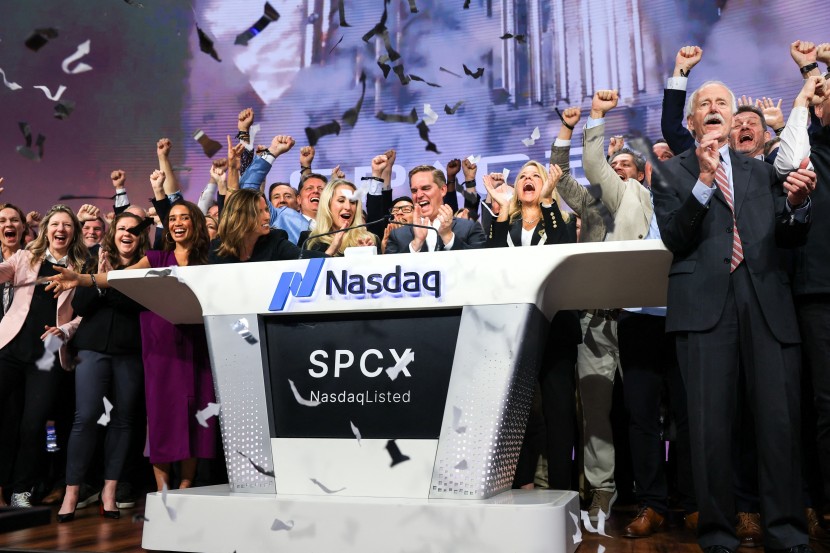
NEW YORK — SpaceX closed its first day of trading on the Nasdaq on Friday at $161.11, up about 19% from the $135 price set in its initial public offering, capping the largest stock market debut on record.
The close left Elon Musk's rocket, satellite and AI company valued at about $2.1 trillion. Shares opened at $150, climbed as high as $176.52 — briefly lifting the company's value to roughly $2.2 trillion, near Amazon's — and swung through the session before settling, a volatile first day that nonetheless cemented SpaceX as one of the most valuable companies ever to go public, debuting larger than Tesla and eclipsing Saudi Aramco's 2019 listing as the biggest IPO ever.
At the offering price, SpaceX sold about 555.6 million shares to raise roughly $75 billion. The first-day gain added sharply to the fortune of Musk, already the world's richest person, moving him closer to a milestone no individual has reached: a net worth of $1 trillion.
For ordinary investors, the listing was a milestone in itself. SpaceX spent more than two decades as a private company whose shares were available only to insiders and accredited buyers on secondary markets. Friday marked the first time the public could own a piece directly — though those who bought at the open paid well above the $135 that early IPO investors received, and analysts cautioned that first-day prices often swing sharply before settling.
The company that arrived on the public market is effectively a conglomerate. Starlink, its satellite-internet unit, is the profit engine, generating more than $11 billion in 2025 revenue at a wide margin and serving over 10 million subscribers, while heavy spending on the Starship rocket program and the recently merged xAI arm weighs on earnings. Analysts are split: Oppenheimer initiated coverage with a buy rating and a $190 target, while Morningstar pegged fair value near $780 billion, less than half the IPO valuation.
The debut sets up a second-day jolt. MSCI said it will add SPCX to its indexes beginning Saturday, forcing passive funds that track major benchmarks to buy the stock. With only about 4% of the company floated, that structural demand could add to the volatility. Elon Musk will retain more than 80% of the voting power after the offering.
The listing capped a remarkable stretch for markets. Stocks rose Friday on growing expectations of a U.S.-Iran agreement to reopen the Strait of Hormuz, and SpaceX's debut became the day's marquee event — a test of how public investors value a company long seen as the crown jewel of the private market. The first real verdict came Friday; the next, analysts said, will come with the company's first earnings report as a public company later this year.
Trading was frenzied: more than 360 million shares changed hands within hours, roughly 10 times the first-day volume of this year's next-largest IPO.
© 2026 HNGN, All rights reserved. Do not reproduce without permission.


