Iran said it had closed the Strait of Hormuz to all marine traffic and declared the April ceasefire "meaningless" after the United States struck targets across the country for a second straight night, a sharp escalation that Tehran answered with attacks on U.S. bases in the Gulf.
U.S. Central Command said its forces completed the strikes early Thursday, about four hours after they began shortly after midnight in Tehran, hitting "military surveillance capabilities, communication systems, and air defense sites across Iran." Iranian state media reported loud explosions in several cities. CENTCOM said the strikes were a response to "Iran's unwarranted and continued aggression."
Iran's Islamic Revolutionary Guard Corps said it launched counterattacks on 18 U.S. military targets at airbases in Kuwait and Bahrain, where the interior ministry said sirens sounded. Iran's joint military command said the Strait of Hormuz was now closed to all marine traffic and warned it would fire on any vessel attempting to pass; Iranian media reported two ships were fired upon. CENTCOM disputed the claim, saying the waterway remained open and commercial vessels were still transiting.
Iran's Foreign Ministry condemned the overnight strikes as a "flagrant violation" of international law that it said "effectively rendered the April 8 ceasefire meaningless." There were no immediate reports of casualties from the Gulf bases, which intercepted earlier rounds of fire this week.
The exchange traces to the downing of a U.S. Army Apache helicopter near the strait early Monday, which Trump blamed on Iran. The U.S. struck about 20 Iranian targets on Tuesday and again overnight Wednesday, while Iran has targeted U.S. bases in Bahrain, Kuwait and Jordan. President Donald Trump had warned that Tehran would "pay the price" for stalled negotiations, and Defense Secretary Pete Hegseth said the U.S. would "negotiate with bombs" if needed.
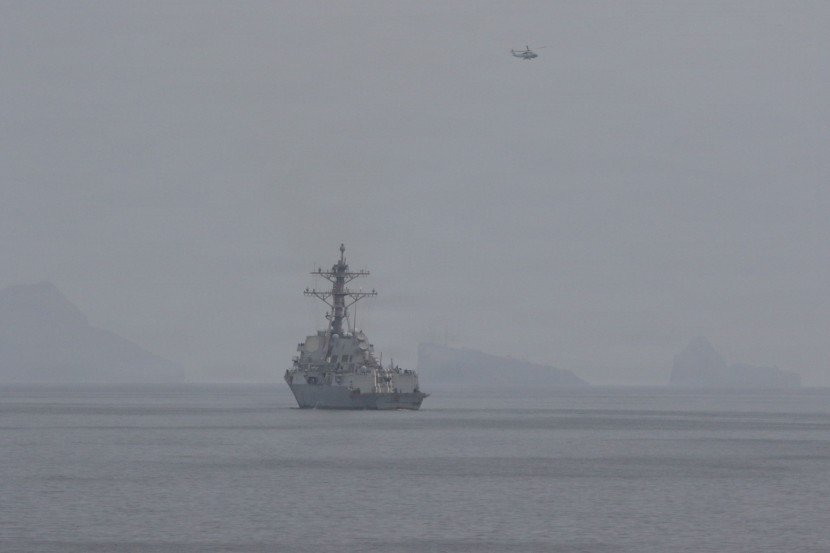
The U.S. has also intensified a naval blockade around the strait. India's government said three Indian nationals were killed when U.S. forces fired on a Palau-flagged tanker off the coast of Oman, the first confirmed deaths reported in the maritime campaign.
Diplomatic efforts continued in parallel. A Qatari negotiating team traveled to Tehran on Wednesday, and the U.N. nuclear watchdog's board approved a U.S.-backed resolution demanding Iran declare its enriched uranium stockpile and admit inspectors, according to RFE/RL. The 2026 Iran war began Feb. 28 after nuclear talks collapsed.
Updated June 11, 2026, 8:30 a.m. ET. This is a developing story.
© 2026 HNGN, All rights reserved. Do not reproduce without permission.