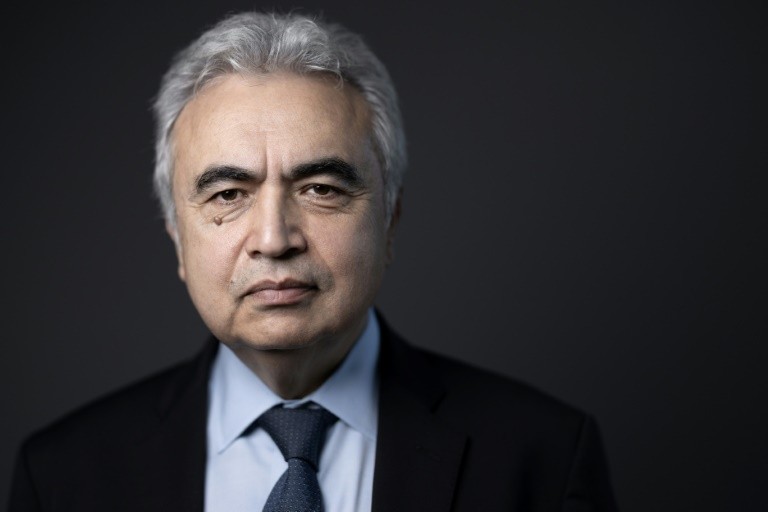
International Energy Agency head Fatih Birol said on Tuesday that current oil prices don't fully show the gravity that energy markets face as a result of the war in Iran and the Middle East in general.
Speaking at the Semafor World Economy conference in Washington, Birol said that if the Strait of Hormuz is not opened soon oil prices could be much higher than the current ones.
MORE-
— Phil Stewart (@phildstewart) April 14, 2026
(Reuters) - Today's high oil prices do not reflect the gravity of the threat to global energy markets from the Iran war and could rise much higher if the Strait of Hormuz does not re-open, Fatih Birol, the head of the International Energy Agency, said on Tuesday.
"The… https://t.co/ZnwZVETHEP
The warning echoes that of the agency, which has warned that global oil demand is now expected to decline in 2026, marking a sharp reversal from earlier projections as disruptions continue.
The agency revised its outlook amid escalating geopolitical tensions and supply disruptions in one of the world's most critical oil transit routes. Handling roughly a fifth of global seaborne oil flows, it has become a focal point of market instability following recent conflict-related disruptions in the region.
Reuters reported that the revised outlook reflects both reduced supply availability and weaker consumption in key regions, particularly in Asia, where refiners and industrial buyers are adjusting to tighter crude flows and elevated transport risks.
Meanwhile, The Wall Street Journal reported that market participants are increasingly pricing in prolonged risk premiums, with traders wary that any escalation could further constrain global supply chains.
In this context, the IMF cut its global growth forecast to 3.1%, 0.2 points less than its previous report. However, the estimation is that the war will end soon and oil will average $82 per barrel this year. However, its "adverse scenario" in which the conflict lasts longer sees oil prices averaging $100 per barrel and growth slowing to 2.5%.
The worst-case scenario sees a "severe scenario" in which global growth is reduced to 2%. "This would mean a close call for a global recession," the IMF said.
IMF Chief Economist Pierre-Olivier Gourinchas told Reuters that central banks may need to "inflict a lot more pain to get the same disinflation result" as after the pandemic. However, this will also depend on the duration of the conflict in Iran.
Originally published on IBTimes
© Copyright IBTimes 2024. All rights reserved.


