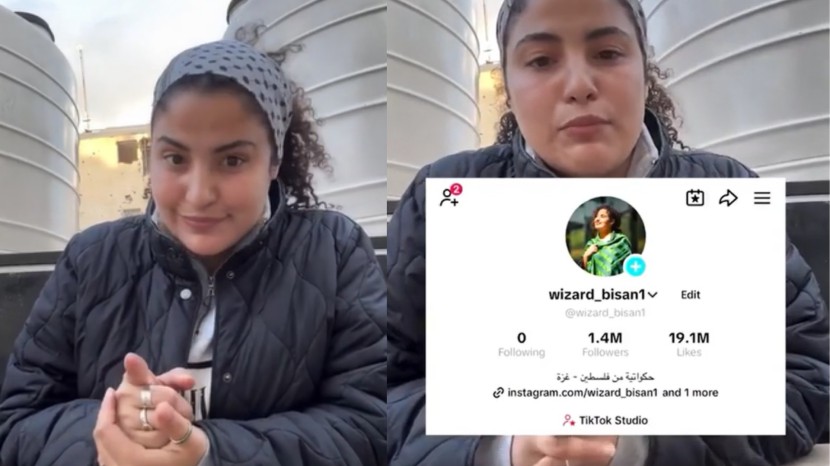
Palestinian journalist Bisan Owda has claimed that TikTok permanently banned her account, alleging censorship tied to her coverage of sensitive political issues in Palestine.
In a video statement, she said the ban is not temporary, adding that she had anticipated it following recent interviews of Israeli Prime Minister Benjamin Netanyahu and TikTok's new US owner.
Owda warned that any accounts claiming to be her are scams and shared a proverb in Palestinian language, suggesting she plans to continue her reporting on a new platform.
Why Owda Expected the TikTok Ban
Owda linked her ban to two interviews she shared.
In one, she noted that Netanyahu discussed increased engagement on social media, likening the online strategy to military operations. This time, their first priority is TikTok.
In the second, she cited statements from TikTok's CEO regarding moderation policies, which included classifying the term 'Zionist' as a protected attribute in the context of hate speech. It's explained that the platform differentiates between positive self-identification and derogatory use.
The interview further noted that TikTok reportedly tripled the number of accounts banned for hateful activity in 2024 and relies on intelligence from over two dozen Jewish organisations to monitor violent trends.
'In the course of 2024, we tripled the amount of accounts that were were banning for hateful activity. We also have, I think, over two dozen Jewish organisations that are constantly feeding us intelligence and information when they spot violent trends. There's no finish line to moderating hate speech, identifying hateful trends, trying to keep the platform safe'.
Concerns Over Censorship in Palestine
Observers say the ban worsens the ongoing challenges faced by journalists in Palestine, where social media platforms are a key outlet for reporting but are subject to global content moderation rules. Owda's claims raise questions about how moderation practices may disproportionately affect reporting on conflicts and political issues in the region.
She suggested that the enforcement of TikTok's rules on hate speech and targeted content moderation may inadvertently limit Palestinian voices. In her video, she also reassured followers that she intends to return to reporting through a new platform with new videos, adding a Palestinian proverb, ''A sieve cannot block out sunlight'.
Recent TikTok Censorships After US Ownership
Ever since TikTok's US operations became mostly American-owned in January 2026, there have been claims that the platform is censoring some content. The new US entity, called TikTok USDS Joint Venture LLC, is primarily owned by American companies such as Oracle and Silver Lake, while the Chinese parent company, ByteDance, holds a smaller stake.
This change was meant to address US security concerns and ensure that TikTok could continue operating in the US.
After the ownership change, some users noticed issues such as delayed uploads, missing posts, and less frequent appearances of certain political content.
Posts critical of US President Donald Trump, especially those related to the Epstein files, were among those flagged by users as less visible. TikTok says these issues were caused by a technical problem in one of its data centres, not by intentional censorship, and that it is working to fix it.
California Governor Gavin Newsom also said he would review whether TikTok was hiding content critical of Trump. TikTok maintains that the problems are technical and not political. Some creators feel the platform is now unfairly limiting certain voices to please Trump, since most owners are reportedly tied to the US President.
Originally published on IBTimes UK
© Copyright IBTimes 2025. All rights reserved.