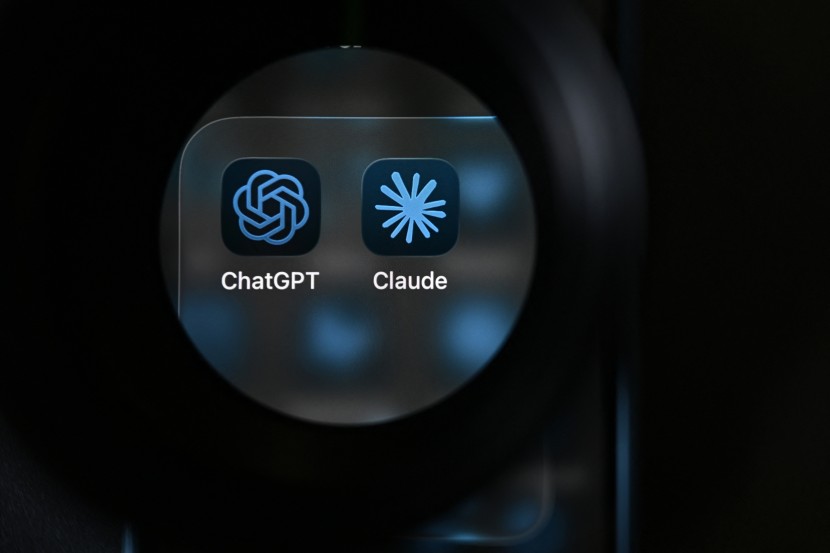
The rivalry between OpenAI and Anthropic is entering a new phase as both artificial-intelligence companies move toward potential public offerings while facing growing pressure to attract enterprise customers and demonstrate sustainable business models.
What began as a competition over chatbot performance has evolved into a broader contest involving platform development, investor confidence, enterprise adoption and pricing strategies. Industry observers increasingly view the battle between the creators of ChatGPT and Claude as one of the defining rivalries in the AI sector.
The latest escalation comes as both companies prepare for potential stock-market debuts. Anthropic confidentially filed paperwork for a proposed initial public offering earlier this month, while OpenAI followed days later with its own confidential filing with the U.S. Securities and Exchange Commission. Analysts expect investors to closely compare the companies' growth rates, revenue quality and path to profitability once additional financial disclosures become available.
At the same time, reports suggest competition may be extending into pricing.
According to a Wall Street Journal report cited by Reuters, OpenAI has discussed significant price reductions for some AI services as it anticipates a more aggressive battle for users and enterprise customers with Anthropic. Reuters noted that OpenAI has not publicly announced any pricing changes, but the report highlights growing pressure across the industry as businesses become more selective when choosing AI providers.
The possibility of lower prices underscores a broader challenge facing the generative-AI market. While demand for AI products continues to expand, customers are increasingly evaluating providers based on cost, reliability, integration capabilities and long-term value rather than model performance alone.
OpenAI continues to leverage the scale of ChatGPT, which has become one of the world's most widely used AI applications. The company has expanded beyond conversational AI by introducing agent capabilities, coding tools, search features and productivity services designed to keep users within a broader ecosystem. Those initiatives have supported OpenAI's efforts to position ChatGPT as a platform rather than simply a chatbot.
Anthropic has pursued a somewhat different strategy. The company has focused heavily on enterprise adoption, emphasizing Claude's reliability, safety features and long-context reasoning capabilities. Founded by former OpenAI executives, Anthropic has emerged as OpenAI's most significant independent competitor and has attracted substantial backing from major technology partners and investors.
The rivalry now extends well beyond product launches. Both companies are investing heavily in infrastructure, enterprise sales, developer ecosystems and market positioning as they seek to strengthen their standing ahead of potential IPOs.
The competition is unfolding against a backdrop of broader industry pressure. Google continues to expand Gemini across its search and productivity ecosystem, Meta is integrating AI features throughout its family of applications, and Elon Musk's xAI is investing aggressively in Grok. The result is a rapidly evolving market in which companies are competing simultaneously for users, developers, enterprise contracts and investor attention.
For investors, the next chapter of the AI industry may hinge on whether leading companies can translate rapid adoption into durable and profitable businesses. As OpenAI and Anthropic move closer to potential public listings, the focus is increasingly shifting from technological leadership alone to questions of pricing power, customer retention and sustainable growth.
The race to dominate artificial intelligence is no longer confined to research breakthroughs. It is becoming a contest over platforms, profitability and long-term market leadership—one that could help shape the future of the AI industry for years to come.
© 2026 HNGN, All rights reserved. Do not reproduce without permission.