The United States and Iran exchanged military strikes between Tuesday night and early Wednesday, U.S. and Iranian officials said, after President Donald Trump blamed Tehran for downing a U.S. Army Apache helicopter near the Strait of Hormuz. There were no immediate reports of U.S. casualties, and several Gulf states said incoming fire was intercepted.
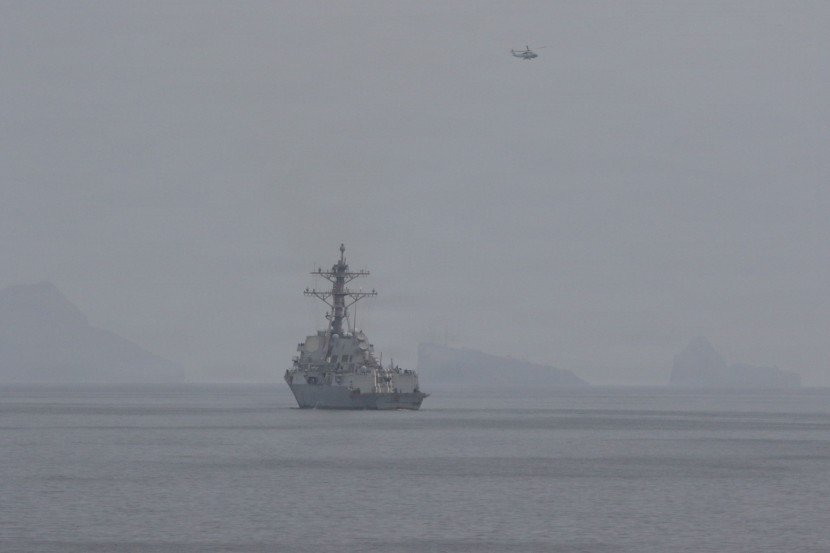
U.S. Central Command said its forces struck "Iranian air defense, ground control stations, and surveillance radar sites near the Strait of Hormuz," describing the operation as a "proportional response to unjustified Iranian aggression." Iranian state media reported explosions around 2:35 a.m. local time near Jask, Qeshm Island and the port city of Bandar Abbas — strategic sites along the strait — according to CNN.
Iran's Islamic Revolutionary Guard Corps said it carried out retaliatory attacks on U.S. targets across Bahrain, Kuwait and Jordan. The Guard said it struck the U.S. Navy's 5th Fleet in Bahrain, fired missiles toward facilities at the Al-Azraq base in Jordan and targeted the Ali al-Salem base in Kuwait, and claimed it downed a U.S. MQ-9 drone. Iranian Foreign Minister Abbas Araghchi said, "Our powerful armed forces will leave no attack or threat unanswered."
Jordan, Bahrain and Kuwait all said they activated air defenses and intercepted the incoming fire, with no casualties or damage confirmed in any of the three countries. A U.S. official told Reuters there were no reports of American casualties or damage to U.S. facilities, and that "just about all" of the missiles and drones had been intercepted.
The exchange followed the crash of the Apache off the coast of Oman on Monday. A U.S. official said indications were that the helicopter was brought down by a one-way attack drone, though officials said the cause remained under investigation. CENTCOM said the two crew members were rescued within about two hours by a U.S. Navy sea drone and were in stable condition.
The escalation dealt a blow to efforts to wind down the conflict. Trump had said this week that an agreement could be reached within days and that the U.S. naval blockade would remain until a deal was struck. The 2026 Iran war began on Feb. 28, and the two sides have traded fire repeatedly during an uneasy and frequently interrupted truce.
This is a developing story.
© 2026 HNGN, All rights reserved. Do not reproduce without permission.