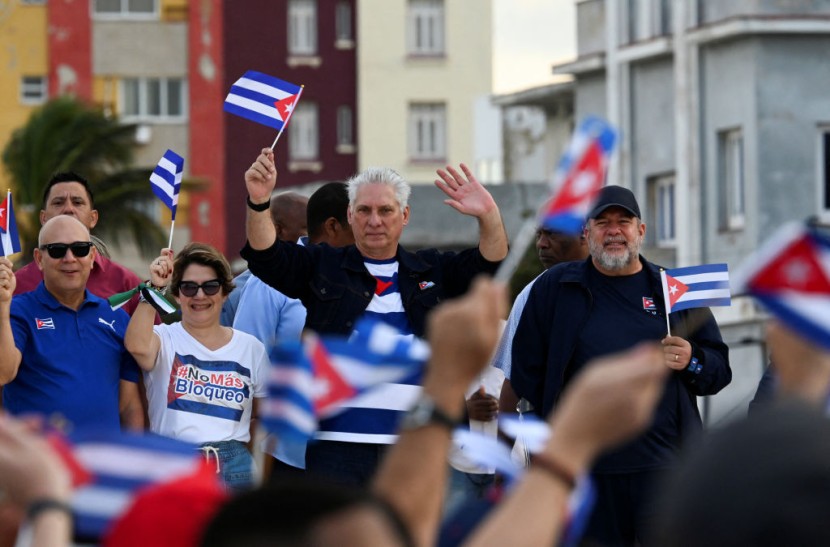
Cuban President Miguel Díaz-Canel said Raúl Castro is leading ongoing talks with the United States, offering a rare glimpse into a diplomatic process that authorities had previously handled with limited public acknowledgment.
In an interview with Spanish politician Pablo Iglesias, Díaz-Canel said Castro "is one of those who has directed, together with me and other institutions of the party, government and state, how we should conduct this dialogue process." He added that the talks are taking place "under the direction of the army general," referring to Castro, whom he described as the "historic leader of the revolution," despite no longer holding formal office.
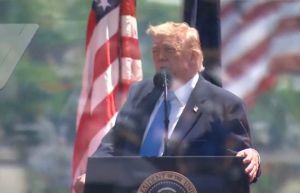
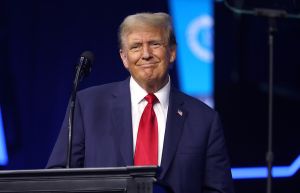
The remarks mark one of the clearest confirmations to date that high-level discussions between Havana and Washington are underway under the administration of Donald Trump.
Díaz-Canel acknowledged that contacts exist and said they are being facilitated by unnamed international actors, though he declined to identify them, citing the sensitivity of the process. "We do not want to burn that source," he said, emphasizing that such efforts require discretion.
Díaz-Canel indicated that Cuba is open to discussing a broad range of issues, including "investments," U.S. participation in the Cuban economy and "migration issues." He also mentioned potential cooperation on security, environmental matters, and scientific and educational exchanges.
However, he set clear limits, stating that any dialogue must respect "our sovereignty, our independence and our political system," adding that those elements "are not up for discussion."
The Cuban leader said the talks remain in an early stage and that it is still unclear what the United States ultimately seeks. "That moment has not yet arrived," he said when asked about U.S. demands, describing the current phase as an effort to determine whether a formal negotiating agenda can be established.
His comments come after months of speculation about backchannel communications between the two countries. Reports have pointed to meetings in international settings and contacts involving senior officials, including U.S. Secretary of State Marco Rubio and individuals linked to the Cuban leadership.
Díaz-Canel also reiterated longstanding criticisms of U.S. policy, arguing that Washington's stance is driven by a "hegemonic" mindset and a "fear of the example of Cuba." He maintained that the island does not pose a threat to the United States, stating: "We are not a threat to anyone."
The acknowledgment of talks comes as Cuba faces a deep economic crisis marked by energy shortages, inflation and migration pressures.
Originally published on Latin Times
© 2025 Latin Times. All rights reserved. Do not reproduce without permission.