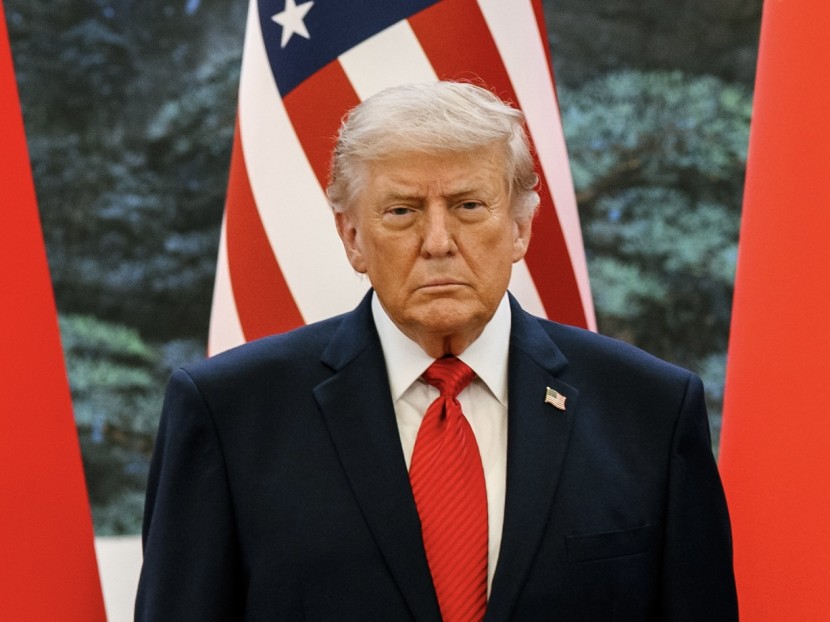
Donald Trump has approved the creation of a $1.776 billion Anti-Weaponization Fund in Washington as part of a settlement reached on Monday with the US Department of Justice over his leaked tax returns, prompting critics to brand it a $1.7 billion MAGA slush fund because taxpayer-funded payouts will go to anonymous claimants whose identities and awards will be kept from public view.
The fund is the centrepiece of a deal ending Trump's lawsuit against the Internal Revenue Service, which stemmed from the release of his tax records during Joe Biden's presidency. According to documents cited by The Daily Beast, the fund will compensate people who say they were 'persecuted' by the Biden administration and will sit under the control of a handpicked commission reporting privately to the attorney general rather than to Congress or the wider public.
How the fund would work
The settlement lays out a structure that has raised alarm among government ethics watchers. The $1.776 billion Anti-Weaponization Fund will be overseen by a five-member commission, with every commissioner appointed by acting Attorney General Todd Blanche, who previously served as Trump's personal lawyer.
Trump will also have the power to remove commissioners without cause, giving the White House a direct line of influence over the panel. One seat must be filled 'in consultation with congressional leadership,' but there is no requirement that the commission be bipartisan or include independent experts.
The secrecy provisions are even more striking. The agreement says the fund must provide the attorney general with a confidential written report listing 'the name and address of each claimant who has received any relief and if so, nature of such relief' on a quarterly basis or whenever directed. There is no equivalent requirement to inform the public, meaning taxpayers could finance a large pool of payouts without knowing who received the money or how much was paid.
Critics say the arrangement resembles political patronage. The Daily Beast reported that although Trump himself is barred from directly receiving payments, entities tied to him could still collect money, fuelling concern that allies or friendly organisations may be able to benefit with limited scrutiny.
Donald Sherman, president of the watchdog group Citizens for Responsibility and Ethics in Washington, described the arrangement as 'one of the single most corrupt acts in American history.' The language is forceful, but it reflects the level of concern among those who see a sitting president approving a large, largely untraceable compensation scheme for self-declared victims of his political opponents.
Trump team defends deal
For Trump's team, the Anti-Weaponization Fund is being framed as a correction, not a slush fund. Acting Attorney General Todd Blanche defended the deal, saying the machinery of government should never be weaponised against any American and that the department intended to 'make right the wrongs that were previously done while ensuring this never happens again.'
A spokesperson for the president's legal team went further in comments quoted by The Daily Beast, telling Politico that Trump, his family, supporters and other America First 'patriots' had been illegally targeted by Democrat-led law enforcement agencies, including the Department of Justice and the IRS. The spokesperson said Trump was entering the settlement 'squarely for the benefit of the American people' and vowed he would continue his fight to hold those who wrong America accountable.
Those are serious allegations, but they remain untested in the material cited by the report. The article does not point to court findings showing that every investigation into Trump allies during the Biden years was unlawful, nor does it identify which cases will qualify for relief under the fund.
Reporter: Why should taxpayers pay $1.6 billion for January sixers?
— Acyn (@Acyn) May 18, 2026
Trump: It’s being very well received. I know very little about it. I wasn't involved in in the whole creation of it. This is reimbursing people who were horribly treated. pic.twitter.com/QEMlIlSVFy
Trump himself, speaking at a healthcare affordability event on Monday, cast the settlement as a form of restorative justice he was not directly involved in creating. He said he had not taken part in the negotiations, then described recipients as people who had been 'horribly treated' and 'weaponised.'
He added that some had been imprisoned wrongly, others had been forced to pay legal fees they could not afford, and some had gone bankrupt. Trump said their lives had been destroyed, and argued that in some cases they had turned out to be right.
Questions over beneficiaries
The settlement summary quoted by The Daily Beast does not name individual cases, and there is still no independent list of who may qualify for payment. That lack of detail matters, especially given Trump's past remarks about financially helping some of his most controversial supporters, including people involved in the 6 January Capitol riot, whom he has repeatedly described as 'patriots.'
The new Anti-Weaponization Fund does not explicitly mention 6 January defendants. But with Trump allies in charge of the commission, a mandate to help people who say they were persecuted under Biden, and no public reporting on who is eventually paid, the line between redress and political reward is likely to come under scrutiny.
Until the first payments are made and more detail emerges, the fund's real shape will remain unclear. What is known is that the arrangement keeps the key decisions out of public view, leaving taxpayers to bankroll a process whose beneficiaries and standards are still opaque.
Originally published on IBTimes UK
© Copyright IBTimes 2025. All rights reserved.


