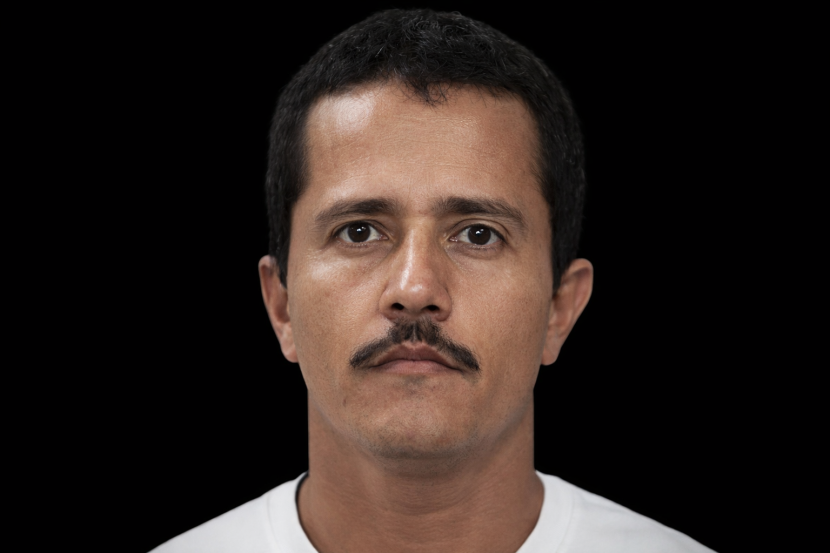
A Mexican general detailed that forces managed to find and kill Nemesio Ruben Oseguera Cervantes, known as "El Mencho," the longtime leader of the Cártel Jalisco Nueva Generación (CJNG), after tracking down a lover of his.
Speaking during President Claudia Sheinbaum's daily press conference, General Ricardo Trevilla Trejo detailed the operation that led to El Mencho's killing.
He said that military intelligence managed to locate a man close to one of El Mencho's lovers, allowing them to determine his location. Once the person left the premise, officers confirmed that El Mencho stayed there. Forces then moved on to detain him, engaging in a shootout with cartel operatives there.
Trevilla Trejo noted that that El Mencho tried to escape while leaving a group of operatives behind to slow down government forces. He made it to a nearby wood, but forces pinned him down and wounded him. El Mencho was taken to a helicopter heading to Mexico City, but he died on the way.
The strike was part of an operation in the mountains of Jalisco and was framed as a major security success for President Claudia Sheinbaum's government.
Oseguera Cervantes rose from local criminal networks into the top tier of Mexico's underworld, becoming the face of CJNG's rapid expansion. The cartel emerged after fractures in earlier organizations, and over time built a reputation for combining sophisticated trafficking with aggressive territorial violence, as well as diversification into other illicit businesses.
According to In Sight Crime, CJNG is not just a cartel. It has been described by U.S. officials and researchers as a network that grew by absorbing or partnering with existing criminal cells in multiple regions, which is one reason "decapitation" events can trigger unpredictable splintering.
One likely short-term consequence is volatility. Research on cartel fragmentation and Mexico's "kingpin" era has repeatedly found that removing a top leader can produce splintering, contested leadership, and new local wars as factions fight over revenue streams and routes. Analysts who track armed group dynamics have warned that Mexico's criminal landscape is already prone to shifting battle lines, with major groups exploiting rivals' internal fractures and rapidly expanding into gaps.
A second possibility is that CJNG adapts rather than collapses. CJNG has been described as unusually expansionist and organizationally flexible, with a footprint that extends through multiple states and an ability to plug into local cells. That type of network can sometimes survive leadership losses if the financial and logistics architecture remains intact.
A third impact is on the broader rivalry map. If CJNG's internal leadership becomes contested, rivals could attempt to seize territory or trafficking corridors, especially in hotspots where CJNG already faces entrenched enemies. Conversely, if CJNG's next leadership consolidates quickly, the cartel may seek to demonstrate strength through retaliation, roadblocks, and intimidation, tactics already reported around the operation.
Originally published on Latin Times
© 2025 Latin Times. All rights reserved. Do not reproduce without permission.