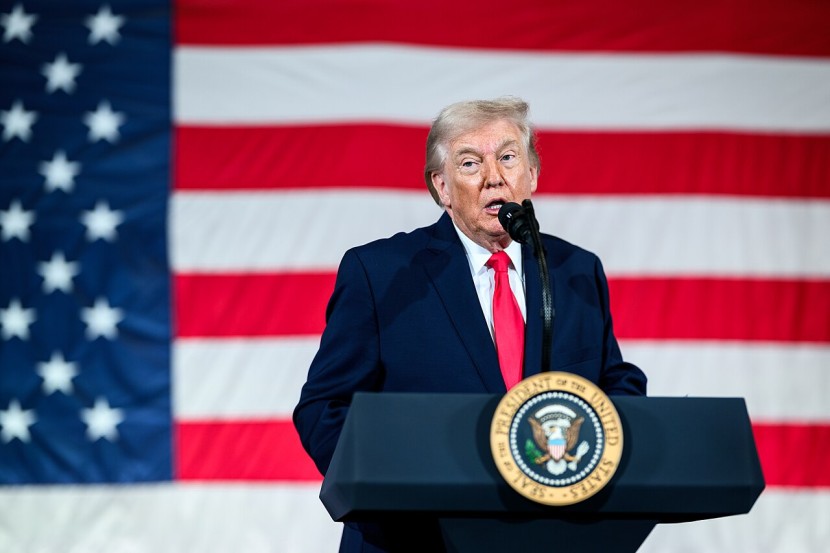
The annual set-piece of American politics is supposed to project steadiness: the president at the rostrum, the Cabinet lined up, Congress packed shoulder to shoulder under the television lights. Next week, when US President Donald Trump delivers his State of the Union, that picture may be noticeably fractured — dotted with empty chairs, bristling with quiet acts of dissent and the occasional very public snub.
For House Democrats, this is no longer just another night of choreographed applause. It is unfolding against the backdrop of a Department of Homeland Security shutdown and a furious argument over immigration enforcement after federal agents fatally shot two US citizens in Minnesota. The president will talk about the state of the nation; many of his critics intend to use the same stage to show what they think is broken.
Silent Seats At Trump's State Of The Union Address
Inside the Democratic caucus, there is no single agreed script — only a shared impulse not to sit there, smile politely and pretend this is normal. Some members are opting for the bluntest message possible: they simply will not turn up.
Nevada congresswoman Dina Titus plans to watch from her office rather than take her assigned seat in the chamber, while California's Sydney Kamlager-Dove, who walked out of Trump's address in March, will skip the occasion altogether this time. Progressive firebrand Rep. Alexandria Ocasio-Cortez, asked whether she would attend, replied: 'Probably not, no,' having previously chosen to livepost commentary on Bluesky rather than sit through the president's speech.
Others intend to be physically present but emotionally and politically absent. In a closed-door meeting, House Minority Leader Hakeem Jeffries urged Democrats either to stay away or to attend in 'silent defiance' — a phrase that captures the tension between a base demanding fireworks and a leadership anxious not to hand Trump a visual of Democrats heckling on live television.
A few lawmakers appear less interested in restraint. California representative Jared Huffman put it bluntly in an interview with Axios: 'The only question for me is which of his disgusting lines prompts me to get up and leave, because at some point I will.' That is not the language of a party resigned to playing the role of well-behaved extras.
Michigan's Shri Thanedar is also 'thinking' about some form of protest during the address, telling The Hill by text that the president's 'massive corruption, unconstitutional actions, his insults to our allies and despicable acts at Epstein's island must be protested.' This is the register Democrats are using now — moral disgust, not procedural quibbles.
The split runs even through those who normally treat attendance as an institutional duty. California's Ami Bera, a senior member of the House, wrote that he has long felt an 'obligation' to show up for the State of the Union, but that after watching Trump 'run roughshod over the Constitution' and 'openly engage in corruption,' he 'will not give him the dignity' of his presence this year. When long-serving moderates start talking like that, it says something about the depth of the rupture.
Protest Theatre Around Trump's State Of The Union Address
Not every gesture will be as simple as an empty chair or a walkout. Some Democrats are trying to turn the guest list into a form of counter-programming — a way of smuggling real lives into a night that usually runs on rhetoric.
Wisconsin's Gwen Moore is bringing a constituent who runs a non-profit daycare and campaigns for the Affordable Care Act, arguing that in what is likely to be a divisive address, there should be someone in the room who understands the pressure of finding affordable childcare and healthcare.
Virginia representative Jennifer McClellan is inviting a guest whose family, her office says, has been hit hard by 'disastrous' Republican policies and now faces an 'active health care crisis' on top of trying to pay the bills.
Maryland's Glenn Ivey has gone further, calling for a 'responsible counter-narrative' that forces policymakers to confront 'the state of Black and Brown America, and the state of working America broadly.' It is a reminder that for many of Trump's opponents, the State of the Union has become less a moment of national unity than a blank page to be overwritten in real time.
There is recent history here. At last year's address to Congress, Texas Democrat Al Green stood up mid-speech, raised his walking cane and declared that Trump had no mandate — an eruption that ended with the Republican Speaker ordering him removed and the House later voting to censure him along party lines.
Other Democrats walked out or held up hand-made signs reading 'Save Medicaid' and 'False.' Members of the Democratic Women's Caucus turned up in pink, which their chair, Teresa Leger Fernández, described as a colour of 'power and protest'. Depending on your politics, those scenes read either as necessary resistance or as theatre that drowned out the substance.
This year, the stakes feel higher. A partial shutdown is already nibbling at the edges of government, fuelled by a row over how — or whether — to rein in Immigration and Customs Enforcement and Customs and Border Protection. Asked whether the State of the Union should even go ahead if the Department of Homeland Security is still shut, Jeffries answered: 'Well, we'll cross that bridge when we get to it.'
Originally published on IBTimes UK
© Copyright IBTimes 2025. All rights reserved.