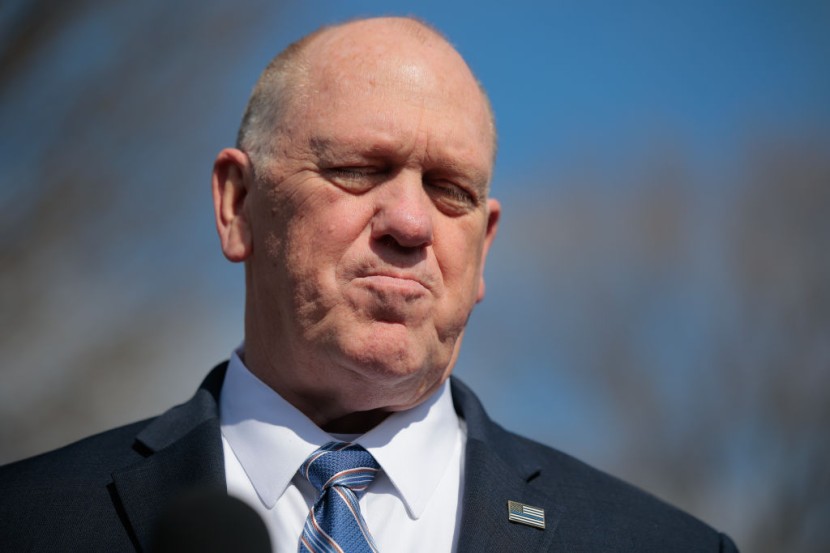
White House border czar Tom Homan announced Thursday that Operation Metro Surge—the controversial federal immigration enforcement operation that flooded Minnesota with thousands of agents—is coming to an end after 10 weeks marked by mass arrests, the fatal shootings of two U.S. citizens, widespread protests, and intense political confrontation.
"I have proposed, and President Trump has concurred, that this surge operation conclude," Homan told reporters at a Thursday morning press conference at the Bishop Henry Whipple Federal Building in Minneapolis. "As a result of our efforts here, Minnesota is now less of a sanctuary state for criminals."
The announcement caps a turbulent chapter that saw more than 3,000 federal immigration agents descend on the Minneapolis-St. Paul metro area—a force five times larger than Minneapolis's entire police department of 600 officers—resulting in approximately 4,000 arrests since operations began on November 29, 2025.
The Drawdown Details
Homan previously announced last week that 700 federal agents would immediately withdraw from Minnesota, reducing the federal presence from approximately 3,000 to around 2,000 officers. On Thursday, he confirmed that "a significant drawdown" of the remaining agents would begin immediately and continue through next week.
Prior to Operation Metro Surge, only about 80-150 ICE officers were stationed in Minnesota under normal operations. While Homan indicated the state would not immediately return to that baseline, he said most agents deployed from other states would be sent home, with only "a small footprint of personnel" remaining temporarily to transition operations back to the local ICE field office and ensure "agitator activity" does not flare up again.
Homan said he would personally remain in Minnesota "for a little longer" to oversee the transition and ensure a successful conclusion to the operation.
Justification: "Unprecedented Cooperation"
The border czar credited what he characterized as "unprecedented cooperation" from Minnesota state and local officials as the primary reason the massive federal presence was no longer necessary. He specifically praised Democratic Governor Tim Walz, Minneapolis Mayor Jacob Frey, and state Attorney General Keith Ellison for working with federal authorities despite their political differences and public criticism of the operation.
"We now have the ability to arrest criminal aliens in the safety and security of jails throughout the state at the time they're being released, like we've done in other states," Homan explained. "I've also directed the strategic placement of officers in certain areas throughout the state that respond quickly to sheriffs that want to release somebody and notify us."
This jail-based coordination model allows ICE to take custody of targeted individuals when they're released from county facilities, eliminating the need for large teams of agents conducting street operations in residential neighborhoods—operations that generated the confrontations, protests, and fatal encounters that characterized much of Operation Metro Surge.
However, the claim of "unprecedented cooperation" faced immediate contradiction. Hours after Homan's announcement, the Hennepin County Sheriff's Office—which includes Minneapolis—issued a statement saying its "policy has not changed."
"HCSO does not work with any agency on civil immigration enforcement," the office stated on its website. "That means we do not assist with or comply with any civil immigration requests from ICE."
Hennepin County Sheriff Dawanna Witt had told CBS News earlier in the week she was open to "limited cooperation" with ICE on specific criminal cases, but maintained her office would not conduct civil immigration enforcement. She also revealed the operation had cost her already-understaffed department more than $500,000 in overtime expenses over two weeks, describing the period as "exhausting" for deputies deployed around federal buildings during protests.
The Fatal Shootings
The operation's trajectory changed dramatically following two fatal shootings of U.S. citizens by federal agents in January, incidents that sparked national outrage and raised serious questions about the operation's tactics and oversight.
Renee Nicole Good, 37, a mother of young children, was shot and killed by federal agents on January 8 during what authorities described as a confrontation. Weeks later, on January 25, agents fatally shot Alex Pretti, 37, an ICU nurse at a local Veterans Affairs hospital, during another encounter with protesters.
Both victims were U.S. citizens. Neither was an immigration enforcement target. Their deaths galvanized opposition to Operation Metro Surge and put enormous pressure on the Trump administration to change course.
President Trump initially called Pretti's death "very unfortunate" and said he wanted to "de-escalate" the situation. However, by the following Friday, Trump called Pretti an "agitator and, perhaps, insurrectionist" in a post on Truth Social, illustrating the administration's conflicting messaging about the Minnesota operation.
Following the second shooting, Trump replaced Border Patrol commander Gregory Bovino with Homan, sending the border czar to Minneapolis to personally take control of the operation. Homan acknowledged Thursday that "there were some issues here" but insisted they had been addressed.
As part of reforms, Homeland Security Secretary Kristi Noem announced that federal immigration agents in Minnesota would be equipped with body cameras—equipment Homan said was now being funded and deployed.
The Numbers: 4,000 Arrests, 200 Protest Arrests
Federal authorities arrested approximately 4,000 people on immigration violations since Operation Metro Surge began on November 29, according to the Department of Homeland Security. However, officials have not provided a breakdown of how many arrestees had criminal charges beyond immigration violations.
While the Trump administration characterized those arrested as "dangerous criminal illegal aliens," reports indicate many people with no criminal records, including children and U.S. citizens, were also detained during the operation. This discrepancy between administration rhetoric and operational reality became a point of significant criticism.
Additionally, federal authorities arrested more than 200 people for allegedly impeding the work of law enforcement officers during protests and demonstrations. These arrests included protesters at a church service led by a pastor who is allegedly also an ICE agent, as well as former CNN anchor Don Lemon, who was covering the event. Lemon's attorney said his client would plead not guilty to the charges.
Political Reactions: Victory Declarations and Continued Criticism
Political responses to the operation's end split predictably along partisan and jurisdictional lines, with Minnesota Democratic officials declaring partial victory while pressing for complete withdrawal.
Governor Tim Walz posted on social media: "Operation Metro Surge is not making Minnesota safer. Today's announcement is a step in the right direction, but we need a faster and larger drawdown of forces, state-led investigations into the killings of Alex Pretti and Renee Good, and an end to this campaign of retribution."
Walz had told reporters Tuesday he expected the surge to end "in days, not weeks and months" based on conversations with senior Trump administration officials, including Homan and White House chief of staff Susie Wiles. He characterized the operation as an "occupation" and a "retribution campaign" against Minnesota.
Minneapolis Mayor Jacob Frey, who said he had a "positive meeting" with Homan on Monday, responded to Thursday's announcement by writing on social media: "They thought they could break us, but a love for our neighbors and a resolve to endure can outlast an occupation. These patriots of Minneapolis are showing that it's not just about resistance—standing with our neighbors is deeply American."
In a statement, Frey noted: "The drawdown and body-worn cameras are a step in the right direction, but 2,000 ICE officers still here is not de-escalation. My message to the White House has been consistent—Operation Metro Surge has been catastrophic for our residents and businesses. It needs to end immediately."
Attorney General Keith Ellison, testifying simultaneously before the Senate Homeland Security and Governmental Affairs Committee in Washington, sharply criticized the federal operation. "The surge is contributing to violent crime," he said. "Two of the three homicides committed in Minneapolis in 2026 have come at the hands of federal immigration agents."
Mass Deportations Continue
Despite ending the Minnesota surge, Homan emphasized that the Trump administration's broader immigration enforcement priorities remain unchanged and that efforts to achieve "mass deportations" would continue nationwide.
"President Trump made a promise of mass deportation, and that's what this country is going to get," Homan told reporters. "For those who say we are backing down from immigration enforcement or the promise of mass deportations, you are simply wrong. Nothing changed, other than we make sure they're targeted and make sure we know who we're going for, what their immigration record was, their criminal history."
He reiterated that immigration enforcement operations would continue daily throughout the country, adding: "If you're in this country illegally, you're not off the table."
Homan also insisted that while ICE agents had not gone into churches or schools to make arrests during the Minnesota operation, "those locations are not off the table" for future enforcement actions. He declared "zero tolerance" for residents interfering with immigration authorities' work.
White House Press Secretary Karoline Leavitt reinforced this message, stating: "Tom Homan's commitment to draw down forces in Minneapolis today follows these achievements and the new, unprecedented cooperation from state and local officials in Minnesota."
Impact on Universities and Communities
Operation Metro Surge's conclusion comes as relief to Minnesota's academic institutions, which saw international students, faculty, and staff living under heightened anxiety for more than two months. The University of Minnesota and other institutions in the Twin Cities area had issued advisories to international community members about their rights and resources available if encountered by immigration agents.
The operation strained town-gown relationships as universities tried to support affected community members while navigating complex legal and political terrain. Some faculty and student groups organized or participated in protests, raising questions about academic institutions' roles in immigration policy disputes.
Todd Barnette, Minneapolis's community safety commissioner, told WCCO that residents and visitors remained afraid during the surge. "I hear from people daily about how Operation Metro Surge has upended their lives," he said.
Educational institutions also watched with concern as lawsuits challenged the Trump administration's immigration policies affecting schools. Fridley Public Schools, Duluth Public Schools, and Education Minnesota sued the Department of Homeland Security, arguing DHS didn't follow proper rulemaking procedures when it rescinded a policy designating schools as protected areas where immigration enforcement should be severely limited.
The Fraud Investigation Continues
While Operation Metro Surge focused on immigration enforcement, it was initially triggered by conservative media attention to allegations of daycare fraud involving Somali immigrants in Minnesota. Homan indicated that investigations into fraud would continue even as the immigration surge ends, suggesting some federal presence might remain to combat financial crimes separate from deportation operations.
The fraud allegations involved claims that individuals exploited childcare assistance programs, though the connection between those investigations and the massive immigration enforcement operation remained unclear throughout the surge.
A Government Lawyer Removed
In a related development, a Justice Department lawyer who told a federal judge during a court hearing that her job "sucks" was removed from her post, according to a person familiar with the matter. Julie Le had been working for DOJ on detail during the surge, and her removal illustrated the high-pressure environment and internal tensions the operation created within federal agencies.
Lessons and Looking Forward
Operation Metro Surge will likely be studied for years as a case study in immigration enforcement, federal-state relations, use of force policies, and the limits of aggressive enforcement tactics in politically divided jurisdictions.
The operation demonstrated that the Trump administration could rapidly mobilize thousands of federal agents to a specific location and conduct mass arrests. However, it also revealed the political, operational, and public relations costs of such tactics: fatal encounters with U.S. citizens, massive protests, lawsuits, strained relationships with local authorities, and ultimately the need to withdraw after achieving unclear results relative to the resources deployed.
For Minnesota, the operation's end brings partial relief but leaves lasting questions about accountability for the two fatal shootings, the legal status of the thousands arrested, and whether federal-state relationships can be repaired after what Governor Walz called a "retribution campaign."
For the Trump administration, the Minnesota experience may inform future enforcement operations—though whether the lessons learned lead to more cautious or more aggressive tactics in other jurisdictions remains to be seen.
As Homan departed Minneapolis after nearly three weeks personally running the operation, he left behind a state still processing the trauma and disruption of 10 weeks under what many residents characterized as federal occupation, while insisting the administration's commitment to "mass deportations" nationwide continued unabated.
© 2026 HNGN, All rights reserved. Do not reproduce without permission.


