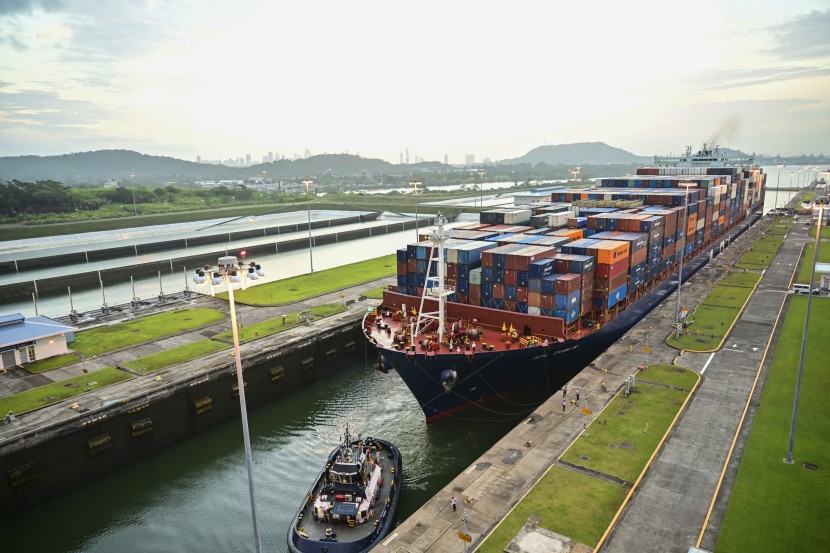
A prominent Chinese legal analyst has urged Beijing to impose "harsh" punishments on Panama and consider postponing President Donald Trump's planned visit to China following a Panamanian Supreme Court ruling that stripped a Hong Kong-based conglomerate of its control over strategic ports at both ends of the Panama Canal.
Tian Feilong, vice dean of the law school at Minzu University in Beijing, argued in an article published on Shanghai-based news portal Guancha.cn that China should inflict "institutional" punishments on U.S. "proxies" in Panama and impose secondary sanctions on relevant American parties. By "squeezing" China out of Latin America, the Trump administration is "trying hard to gain favourable chips" for the president's trip to China later this year, Tian wrote.
The comments represent some of the most aggressive rhetoric yet from Chinese analysts following the January 29 court decision, which voided the contract held by CK Hutchison Holdings' subsidiary to operate the ports of Balboa on the Pacific side and Cristóbal on the Atlantic side of the Panama Canal.
The Supreme Court Ruling
Panama's Supreme Court ruled that the terms under which Panama Ports Company (PPC), a CK Hutchison subsidiary, operates the two critical terminals violated the country's constitution. The company has held these contracts since the 1990s, with an automatic renewal in 2021 extending the license for another 25 years.
The lawsuit challenging PPC's contracts was filed by Panama's Comptroller General Anel Flores in July 2025, alleging irregularities and arguing the concessions harmed national interests. A government audit revealed that CK Hutchison owed approximately $300 million in unpaid fees since 2021 and that accounting errors and unauthorized "ghost" concessions had cost Panama roughly $1.2 billion under the original contract.
"The Plenary of the Supreme Court of Justice of the Republic of Panama...in fulfillment of its obligation as guardian of the Political Constitution...decided to Declare [the concession contract] UNCONSTITUTIONAL," the court stated.
The decision came approximately one year after Trump threatened to seize control of the Panama Canal, claiming it was "vital to our country" and asserting "it's being operated by China." The ruling is widely viewed as a major victory for the Trump administration's efforts to counter Chinese influence in the Western Hemisphere.
China's Escalating Response
China's initial response was measured, with Foreign Ministry spokesman Lin Jian stating Beijing would take all necessary measures to safeguard Chinese companies' legitimate rights and interests. However, the tone has escalated dramatically in recent days.
The Hong Kong and Macao Affairs Office (HKMAO) of China's State Council issued its strongest rebuke yet, calling the court decision "logically flawed," "utterly ridiculous," "absurd," and "shameful and pathetic." The office warned that Panama "will inevitably pay a heavy price both politically and economically" unless it changes course.
"The Panamanian court had 'ignored the facts, breached trust, and seriously damaged the legitimate rights and interests of enterprises in Hong Kong, China,'" the HKMAO stated. "China has sufficient means and tools, and sufficient strength and ability to defend a fair and just international economic and trade order."
According to Bloomberg, China has already begun directing state firms to halt talks over new projects in Panama and asked shipping firms to consider rerouting cargo through other ports—moves that could have significant economic consequences for the Central American nation.
Panama's Defiant Response
Panamanian President José Raúl Mulino has stood firm against Chinese pressure. On Wednesday, he said he "firmly rejected" the statement from the HKMAO, dismissing Beijing's threats.
To ensure continued port operations, Mulino announced that Danish shipping giant A.P. Moller-Maersk would temporarily manage the facilities during the transition period. This arrangement prevents any operational disruption while Panama determines the ports' long-term future.
"Port operations will continue without interruption," Mulino assured, signaling that Panama would not be intimidated by Chinese warnings or economic pressure tactics.
The Blocked BlackRock Deal
The court ruling further complicates an already troubled $23 billion transaction. In March 2025, CK Hutchison announced a deal to sell its non-Chinese port portfolio—including more than 40 ports worldwide—to a consortium led by U.S. investment giant BlackRock and European shipping powerhouse Mediterranean Shipping Company (MSC).
The agreement would have addressed U.S. national security concerns by transferring control of strategically important facilities away from a company with ties to Beijing. However, China moved aggressively to block the deal, subjecting it to antitrust review and demanding that state-owned COSCO Shipping receive a major stake in the acquiring consortium.
Chinese state media denounced the proposed sale as "kowtowing" to American pressure, characterizing it as a betrayal of national interests. The deal remains in limbo pending approval from Chinese regulators—approval that appears increasingly unlikely given the current tensions.
Bloomberg reported last week that CK Hutchison is now considering splitting the transaction into separate deals, potentially selling stakes in ports located in countries friendly to Beijing to COSCO Shipping in order to secure Chinese government approval for selling other assets to Western firms.
CK Hutchison's Legal Response
CK Hutchison announced Wednesday that it had initiated international arbitration proceedings against Panama, stating it would seek "extensive damages" without specifying the amount. The company "strongly disagrees with the [court's] determination" and argues the ruling is inconsistent with existing legal agreements.
"[The ruling is] inconsistent with the 1997 law that approved the contracts," Panama Ports Company wrote in a press release, suggesting grounds for challenging the decision in international forums.
Despite the legal setback, CK Hutchison's stock has shown surprising resilience. Shares closed up more than 2% on Wednesday and have risen more than 20% this year, suggesting investors believe the company will eventually secure compensation through arbitration or negotiate a settlement.
The company, controlled by Hong Kong billionaire Li Ka-shing, operates a global network of 41 international ports located at critical maritime chokepoints including the Suez Canal, the Strait of Malacca, the Strait of Hormuz, and the Bab-el-Mandeb Strait in the Red Sea, as well as facilities in Europe, Mexico, South Korea, and Australia.
Broader Geopolitical Context
The Panama Canal controversy represents one front in a broader U.S.-China competition for influence in Latin America. The Trump administration has made countering Chinese presence in the Western Hemisphere a top priority under what officials call the "Donroe Doctrine"—a play on the Monroe Doctrine that asserts U.S. primacy in the Americas.
The strategic waterway carries an estimated 5% of global maritime trade and approximately 40% of all U.S. container traffic. Control over port facilities at both entrances provides significant advantages for monitoring and potentially influencing commercial shipping patterns.
Beyond the immediate port operations, analysts worry about the intelligence-gathering potential of Chinese-controlled facilities at such a strategic location. Port operators have access to detailed information about shipping routes, cargo contents, timing, and other commercially sensitive data that could provide economic or military intelligence value.
Panama's Shifting Alignment
The court ruling follows another diplomatic blow to Beijing: Panama's announcement in late 2025 that it would terminate its participation in China's Belt and Road Initiative (BRI) ahead of the agreements' scheduled expirations in 2027 and 2028. Chinese officials expressed regret over the decision, suggesting it had been made under U.S. pressure.
Panama established diplomatic relations with China in 2017, breaking ties with Taiwan—a move that initially seemed to mark the country's shift toward Beijing's orbit. However, under Mulino's administration, Panama appears to be recalibrating its position, potentially responding to both U.S. pressure and domestic concerns about Chinese economic influence.
The relationship between Panama and China grew significantly after 2017, with Chinese state-owned enterprises investing in infrastructure projects and Chinese companies expanding commercial operations. However, questions about transparency, labor practices, and whether these investments truly served Panamanian interests generated domestic political opposition.
Implications for Universities and Research
The Panama Canal dispute has implications beyond geopolitics and shipping. Universities conducting research on international trade, maritime security, supply chain resilience, and geopolitical competition are closely monitoring the situation as a case study in great power rivalry.
Academic institutions also watch how Chinese economic pressure tactics—including directing state firms to halt projects and encouraging cargo rerouting—operate in practice. Understanding these mechanisms matters for researchers studying economic statecraft and for universities with international partnerships that might face similar pressures.
Additionally, the case raises questions about the intersection of commercial law, constitutional interpretation, and geopolitical pressure. Did Panama's Supreme Court rule purely on constitutional grounds, or did U.S. pressure influence the decision? These questions animate scholarly debates about sovereignty, legal independence, and great power influence in smaller nations.
Legal and Diplomatic Analysts' Perspectives
Scott Kennedy, a senior advisor at the Center for Strategic and International Studies, described the situation as "a simple contest for dominance in Latin America." He predicted "a drawn-out legal fight in multiple jurisdictions, along with substantial political and economic pressure imposed by both Beijing and Washington."
The legal battle will likely unfold across international arbitration panels, potentially the International Court of Justice, and various national courts as CK Hutchison seeks damages and Panama defends its sovereign right to interpret its own constitution.
Diplomatic analysts note that Tian Feilong's suggestion to postpone Trump's China visit represents an unusually aggressive proposal. Presidential visits typically proceed even amid bilateral tensions, and canceling or postponing such a visit would represent a significant escalation that could damage the broader relationship.
Looking Forward
As CK Hutchison pursues international arbitration and China weighs what "harsh punishments" it might impose, Panama finds itself caught between the world's two largest economies. The small Central American nation must balance its economic interests—including maintaining relationships with both Chinese and American companies—against sovereignty concerns and domestic political pressures.
For Trump, the court ruling provides a tangible victory in his campaign to reduce Chinese influence in the Western Hemisphere. The administration can point to concrete progress toward its stated goal of securing the Panama Canal against what it views as a strategic threat.
For China, the episode represents a setback in Latin America at a time when Beijing seeks to expand its global influence. How aggressively China responds—and whether it follows through on threats of economic punishment—will signal how seriously it takes the challenge to its position in the region.
The ultimate resolution likely lies somewhere between Beijing's demands for reversal and Washington's preference for permanent exclusion of Chinese operators. International arbitration may result in financial compensation for CK Hutchison while still accomplishing the U.S. goal of ending Chinese control over the strategic facilities.
As Tian Feilong's commentary suggests, the dispute may also affect broader U.S.-China relations, potentially complicating diplomatic engagement on other issues and adding another source of friction to an already tense bilateral relationship.
© 2026 HNGN, All rights reserved. Do not reproduce without permission.


