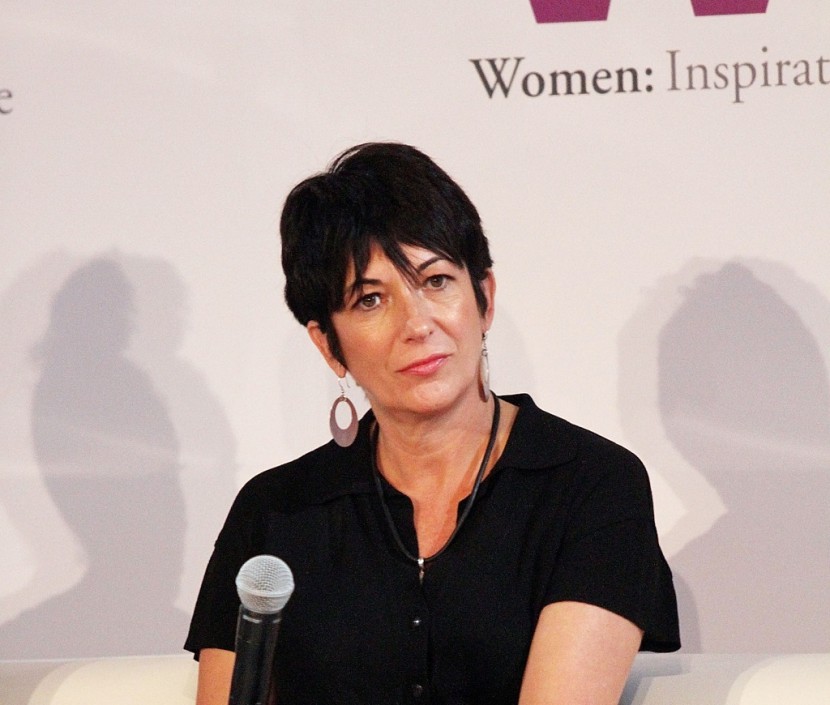
Ghislaine Maxwell, the convicted sex trafficker and Jeffrey Epstein accomplice, invoked her Fifth Amendment rights Monday during a virtual House Oversight Committee deposition but made an extraordinary offer through her attorney: grant her clemency, and she will testify that both President Donald Trump and former President Bill Clinton are innocent of any wrongdoing related to Epstein.
The 64-year-old former British socialite, currently serving a 20-year sentence at a federal prison camp in Texas, appeared via video link for the closed-door deposition. She declined to answer any substantive questions, frustrating lawmakers seeking information about Epstein's decades-long sex trafficking operation and the powerful figures who associated with him.
"As expected, Ghislaine Maxwell took the Fifth and refused to answer any questions," House Oversight Committee Chairman James Comer told reporters following the brief session. "This obviously is very disappointing. We had many questions to ask about the crimes she and Epstein committed, as well as questions about potential co-conspirators."
The Clemency Proposal
Maxwell's attorney, David Oscar Markus, delivered a prepared statement at the start of the deposition outlining his client's conditional willingness to cooperate. The offer represents a calculated gamble that could potentially secure her freedom while simultaneously providing political cover for Trump.
"Ms. Maxwell is prepared to speak fully and honestly if granted clemency by President Trump," Markus stated. "Only she can provide the complete account. Some may not like what they hear, but the truth matters. For example, both President Trump and President Clinton are innocent of any wrongdoing. Ms. Maxwell alone can explain why, and the public is entitled to that explanation."
The attorney emphasized that his client "would very much like to answer your questions" but must invoke the Fifth Amendment due to pending legal challenges to her conviction. Maxwell continues to maintain her innocence and is seeking to overturn her 2021 conviction based on what her lawyers describe as "substantial new evidence" of constitutional violations during her trial.
Markus framed the clemency proposal as serving the public interest by finally providing complete answers about Epstein's operation. "If this Committee and the American public truly want to hear the unfiltered truth about what happened, there is a straightforward path," he said.
Political Reactions Split Along Party Lines
Democrats on the committee immediately condemned Maxwell's offer as a "brazen" attempt to manipulate the political process and purchase her freedom.
"It's very clear she's campaigning for clemency," said Representative Melanie Stansbury, a New Mexico Democrat. Her colleague, Representative Suhas Subramanyam of Virginia, described Maxwell's demeanor during the video call as "robotic" and "unrepentant."
"This is all strategy for her to try to get a pardon from President Trump, and she's never shown any remorse for the victims in this entire case," Subramanyam told reporters. He characterized the clemency offer as an attempt to appeal to both political parties by offering to exonerate leaders from both sides.
Republican committee members, while disappointed by Maxwell's refusal to testify, were more measured in their responses. Comer said he did not believe Maxwell should receive immunity or clemency, but stopped short of ruling it out entirely or criticizing the proposal with the vehemence shown by Democrats.
However, some Republicans expressed strong opposition. Representative Anna Paulina Luna wrote on social media: "NO CLEMENCY. You comply or face punishment. You deserve JUSTICE for what you did you monster."
Trump himself has not publicly responded to Maxwell's offer. The White House has not commented on whether the president would consider granting clemency in exchange for testimony.
Epstein Survivors Respond
Ahead of Monday's deposition, survivors of Epstein's abuse sent a letter to committee members urging them to approach any Maxwell testimony "with the utmost skepticism" and warning against allowing the proceeding to become "another vehicle through which survivors are harmed or silenced."
The letter emphasized Maxwell's ongoing refusal to accept responsibility or identify other participants in the trafficking operation. "To this day, Ms. Maxwell has refused to identify the many powerful men involved in the trafficking operation," the survivors wrote. "She has also been dishonest about the vast sums of money she received as a result of her role in facilitating sexual abuse."
Family members of the late Virginia Giuffre, one of Epstein's most prominent accusers, released their own letter addressed directly to Maxwell. Sky and Amanda Roberts made clear they do not view her as merely Epstein's victim or enabler.
"You were a central, deliberate actor in a system built to find children, isolate them, groom them, and deliver them to abuse," they wrote. The letter rejected any narrative positioning Maxwell as a bystander or minor participant in Epstein's crimes.
These survivor voices underscore the deep suspicion with which many view Maxwell's sudden willingness to "speak fully and honestly"—but only if granted freedom as a reward. Critics argue that genuine cooperation and remorse would involve providing information unconditionally, not as part of a bargaining strategy.
Maxwell's Legal and Prison Situation
Maxwell was convicted in December 2021 of sex trafficking and other charges related to her role in recruiting and grooming underage girls for abuse by Epstein. Prosecutors presented her as central to Epstein's operation for roughly a decade, helping him identify, groom, and sexually exploit victims under age 18.
She was sentenced to 20 years in federal prison and initially incarcerated at a low-security correctional facility in Florida. Last summer, however, she was transferred to a minimum-security prison camp in Texas after participating in two days of interviews with Deputy Attorney General Todd Blanche.
The circumstances of that transfer and those interviews have raised questions. Representative Robert Garcia, the top Democrat on the Oversight Committee, suggested Maxwell received "special treatment" from the Trump administration, noting that her relocation to a more comfortable facility came shortly before the Republican administration took office.
Maxwell's legal team continues fighting her conviction. The Supreme Court rejected her appeal in 2024, but in December she filed a petition asking a federal judge in New York to consider new evidence that her trial was corrupted by constitutional violations. Her attorney cited this ongoing legal challenge as the reason she must invoke Fifth Amendment protection against self-incrimination.
The Epstein Investigation Continues
Monday's deposition represents one element of an expansive congressional investigation into how Epstein—a well-connected financier with ties to powerful business executives, politicians, celebrities, and academics—was able to sexually abuse underage girls for years without being stopped.
The House Oversight Committee has issued subpoenas to numerous individuals connected to Epstein, including former attorneys general, FBI directors, and political figures. Most prominently, both Bill Clinton and his wife, former Secretary of State Hillary Clinton, have been ordered to testify.
The Clintons initially resisted the subpoenas, calling them "invalid and legally unenforceable." However, after Comer threatened contempt of Congress charges, they agreed to sit for depositions scheduled for February 26 and 27. The Clintons have insisted the depositions be held publicly rather than behind closed doors, arguing that public testimony would prevent Republicans from selectively leaking or mischaracterizing their statements.
Comer has thus far refused that request, saying he will conduct closed-door depositions and later release transcripts and video. The chairman argues this approach allows for more thorough questioning without the theatrics that often accompany public hearings.
Trump, despite his past friendship with Epstein, has not been called to testify by the Republican-led committee. The former president fought for months to prevent release of government documents about Epstein, but a rebellion among congressional Republicans forced him to sign legislation mandating disclosure of all related records.
The Epstein Files Release
The backdrop to Monday's deposition is the recent release of millions of pages of internal Justice Department documents related to Epstein under the Epstein Files Transparency Act. The law, passed by Congress and signed by Trump in November 2025, required DOJ to make public all material from investigations into Epstein and Maxwell.
Lawmakers on Monday began viewing unredacted versions of these files, which had previously been released to the public in redacted form. The documents chronicle the federal government's investigations into Epstein's sex trafficking ring and include extensive references to Maxwell's role.
The committee has also demanded documents from Epstein's estate as part of its probe, seeking financial records and other materials that might reveal the full scope of his operation and identify additional participants or enablers.
Historical Context: Epstein and Maxwell
Epstein died in a New York jail cell in August 2019 while awaiting trial on sex trafficking charges. His death was ruled a suicide, though it spawned numerous conspiracy theories given his connections to powerful figures and the potential his testimony held to implicate others.
Maxwell is the only person convicted of crimes related to Epstein's sex trafficking operation. Prosecutors chose to pursue her rather than attempting to bring cases against the wealthy and influential men who allegedly participated in or enabled Epstein's abuse, a decision that frustrated survivors and advocacy groups.
The lack of additional prosecutions has fueled ongoing investigations, including the current congressional probe, as lawmakers and survivors seek accountability beyond Maxwell and the deceased Epstein. The question of who else knew, participated in, or facilitated the abuse remains central to public discourse about the case.
What Clemency Would Mean
Presidential clemency can take several forms. A full pardon would clear Maxwell's conviction entirely, while a commutation would reduce or eliminate her sentence without overturning the conviction itself. Either would represent extraordinary intervention in a high-profile sex trafficking case.
Presidents traditionally grant clemency to individuals who have shown remorse, served substantial portions of their sentences, or present compelling arguments about injustice in their convictions. Maxwell, who has consistently maintained her innocence and shown no public remorse, does not fit the typical clemency profile.
However, her offer to provide testimony exonerating Trump creates a unique political calculation. If Trump believes Maxwell could credibly refute allegations about his relationship with Epstein, that might outweigh traditional clemency considerations—though such a quid pro quo arrangement would likely face intense criticism and potential legal challenges.
Looking Ahead
The committee's investigation continues with the Clinton depositions later this month and ongoing review of the Epstein files. Whether Maxwell's clemency gambit succeeds depends entirely on Trump's willingness to grant it, which remains unclear.
For survivors of Epstein's abuse, Monday's deposition represented another frustrating chapter in a long quest for accountability and truth. Maxwell's refusal to provide unconditional testimony—and her apparent attempt to leverage what she knows for personal gain—reinforces their view that she remains focused on self-preservation rather than justice for victims.
As one survivor advocate put it: "Real cooperation means telling the truth because it's the right thing to do, not because you've negotiated a get-out-of-jail-free card."
© 2026 HNGN, All rights reserved. Do not reproduce without permission.