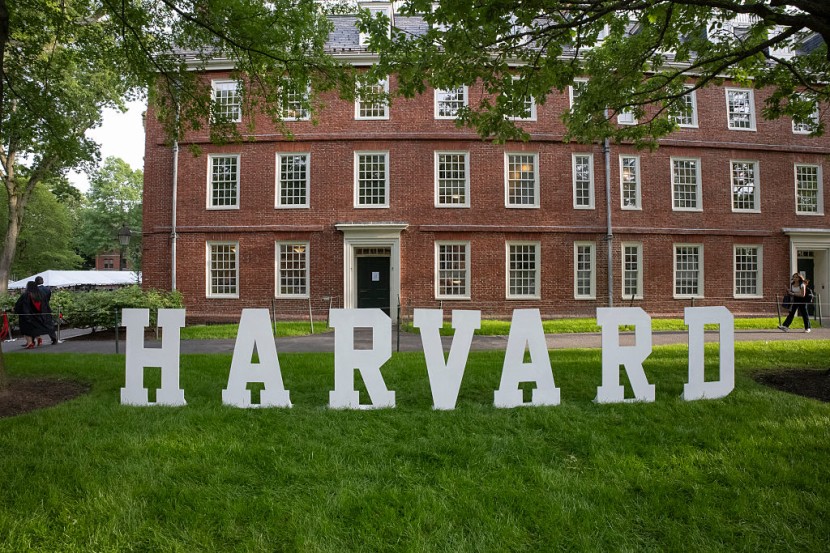
Harvard College has announced a hard cap on the number of students who can receive the highest letter grade in its undergraduate courses, moving to restrict about one‑fifth of class rosters from earning an A beginning in the 2027–2028 academic year.
Under the new policy, no more than 20% of the grades in any given undergraduate course can be A's, with professors allowed up to four additional A grades per class, a formula often described as "20 plus four." That means a lecture with 100 students can have up to 24 A's, while smaller seminars of 20 students may still assign up to eight A's.
The cap does not apply to grades at or below A‑minus, so the number of A‑minus, B's, and lower marks remains unlimited. The rule is tied to Harvard College's undergraduate grading reforms and will not change grading systems at the university's separate graduate and professional schools, according to The Guardian.
Faculty supporting the move say it is aimed at curbing "grade inflation" after internal data showed that roughly two‑thirds of undergraduate letter grades awarded in a recent academic year were A's, up sharply from about one‑third a decade earlier.
Administrators argue that such a high share of top marks has weakened the ability of grades to distinguish levels of performance and to signal exceptional work to employers and graduate programs, the Department of Education reported.
In the same package of changes, Harvard is introducing an adjusted system for calculating the cap based on the total number of undergraduates enrolled in a course and expanding the use of alternative marks, such as "SAT" and a new "SAT+" for some non‑letter‑graded classes.
The policy is scheduled to take effect in fall 2027 and will be formally reviewed after three years of implementation, as per Forbes. Harvard's decision comes as other top universities revisit how they handle both grade inflation and grade distribution.
Princeton previously imposed department‑level targets that effectively limited A‑range grades before later relaxing the university‑wide rules while keeping tougher grading norms in several programs, and selective institutions such as Boston University and Boston College have also been reported to use internal limits or tough curves to keep A's to a minority of grades.
© 2026 HNGN, All rights reserved. Do not reproduce without permission.