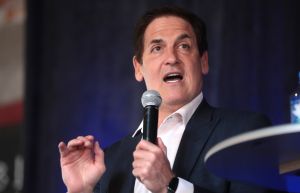
NEW YORK — On January 1, 2026, Zohran Kwame Mamdani was sworn in as New York City's 112th mayor in the abandoned City Hall subway station, taking the oath on the Quran, with Bernie Sanders officiating the public inauguration. At 34, the democratic socialist and former state assemblyman became the city's first Muslim and first Asian American mayor — and immediately set about trying to transform the economic foundations of the most powerful urban economy on earth.
Born in Kampala, Uganda, and raised in New York, Mamdani built his political profile through grassroots activism: hunger striking alongside taxi drivers to secure over $450 million in debt relief, pushing through a fare-free bus pilot, and defeating a proposed power plant in Astoria. His message — that government can and should lower the cost of living for ordinary New Yorkers — resonated in a city where median rents have soared past $3,500 a month and where poverty has risen even as Wall Street notched record profits.
He now governs a city whose economy generates $2 trillion in annual GDP, more than any other metropolitan area in the world. What he does next will ripple far beyond the five boroughs.
The Agenda: Six Pillars of a Progressive City
Mamdani's platform is one of the most ambitious in modern New York mayoral history. The centerpiece proposals are: a four-year freeze on rents for roughly one million rent-stabilized apartments; universal free childcare from age six weeks; fare-free city buses; a $30-per-hour minimum wage by 2030; city-owned grocery stores offering produce at wholesale prices; and a new Department of Community Safety at an estimated cost of $1.1 billion annually.
To pay for this agenda, Mamdani has called for a 2% increase in personal income taxes on New Yorkers earning over $1 million per year, as well as hikes in the city's corporate tax rate. "That 2% tax would resolve nearly half of our budget deficit," Mamdani told Albany lawmakers in February. "I will continue to advocate for these policies not only because they offer the most direct route out of this budget crisis, but because they will transform what is possible in our state."
The ambition is undeniable. So is the complexity.
The Budget Reality: A $7 Billion Gap and a Credit Warning
Three months into his tenure, Mamdani faces a sobering fiscal reckoning. The mayor inherited a city where every major employment sector except healthcare lost jobs in 2025. The city added a meager 27,100 jobs last year, with losses in manufacturing, retail, finance, professional services, and leisure and hospitality.
Mamdani initially estimated a cumulative two-year budget gap of $12 billion — a figure he described as worse than the Great Recession. Wall Street's record bonus season helped narrow that projection: the mayor announced in February that aggressive savings measures and a revised revenue forecast had brought the gap down to $7 billion. "I'm glad to report that by assuming an aggressive posture on savings without compromising city services, incorporating updated revenue and bonus estimates, and using in-year reserves, we have lowered that $12 billion gap to $7 billion," he said in an address to state lawmakers.
The relief was short-lived. This week, Moody's changed its outlook on New York City's credit from stable to negative for the first time since the pandemic, citing the city's projected spending exceeding likely revenues over the next four years. S&P issued its own risk warnings. City Comptroller Mark Levine was blunt: "New York City is spending more money than it takes in."
The Mamdani administration has proposed a preliminary $127 billion budget for the fiscal year beginning July 1 — a record — and has projected a major increase in Wall Street hiring to help offset the fiscal gap. Budget watchdogs warn this assumption is risky given current market volatility, global uncertainty, and the impact of federal tariff policies on the broader economy.
The Tax Battle in Albany
Virtually every major plank of Mamdani's agenda requires approval from Albany. New York's governor, Kathy Hochul, controls the levers on taxation and the Metropolitan Transportation Authority, and she has so far resisted the mayor's most ambitious proposals.
Hochul threw cold water on plans to raise income taxes on the wealthy, though she has left the door open on a potential corporate tax increase. Both chambers of the state legislature included tax hikes in their own budget proposals last week, but Hochul, facing a re-election campaign in 2026, has refused to sign off. The pattern — legislative inclusion without final agreement — has played out repeatedly in recent years.
Mamdani has countered by proposing a property tax increase and tapping city reserves as a "last resort" to pressure Albany, though both measures face broad political opposition. The property tax system in New York is widely considered inequitable, placing the heaviest burden on rental buildings and overtaxing homeowners in predominantly non-white neighborhoods.
Real Estate: Investors on Edge
No sector is watching Mamdani more closely than real estate. His pledge to freeze rents on approximately one million stabilized apartments has drawn fierce opposition from landlords, developers, and housing economists, even as it has energized tenant advocates.
The rent freeze would be implemented through the city's nine-member Rent Guidelines Board, which the mayor controls. But outgoing Mayor Eric Adams appointed or reappointed four board members in his final days in office, potentially delaying any freeze by a year or more. Mamdani would need to wait for those members' terms to expire before reshaping the board.
Critics argue the freeze, however popular, could backfire. New York Apartment Association CEO Kenny Burgos warned that the policy could deter developers: "I don't know any investor or builder who would want to build in a city where the mayor is threatening to cap revenues." Business analyst Ed Elson echoed those concerns, arguing that freezes paradoxically reduce housing supply by discouraging new construction, pushing rents higher in non-stabilized units.
On affordable housing, Mamdani has proposed building 200,000 new subsidized apartments over a decade — tripling the city's current pace — funded through up to $100 billion in municipal bonds and higher taxes. For developers, the dual signal — more housing but stricter rent controls and higher taxes — has created a climate of uncertainty.
Notably, voters in the 2025 general election approved city charter amendments that shift power over land use decisions from the city council to the mayor and city officials, ending individual council members' effective veto over zoning changes in their districts. This gives Mamdani a tool none of his recent predecessors had: the ability to push through pro-housing zoning reforms that previously stalled in council.
Businesses Sound the Alarm — and Rivals Circle
The reaction from the business community has ranged from cautious to alarmed. Proposals for higher corporate taxes, a $30 minimum wage, and city-owned grocery stores have rattled the financial sector, generating sharp criticism from some of the nation's most prominent executives and local politicians.
The Dallas mayor, Eric Johnson, predicted an "avalanche" of Wall Street firms fleeing to Texas if Mamdani pursues his full agenda. Goldman Sachs is already building a 14-floor campus in Dallas; JPMorgan Chase employs more workers in Texas than in New York. "Now New York has a mayor who is openly hostile towards the business community and is pushing for higher taxes on job creators," Johnson said.
The concerns extended to neighboring states. Connecticut Governor Ned Lamont cautioned before the election that Mamdani's policies could destabilize Wall Street and ripple into Connecticut's own financial ecosystem. "New York City is the financial capital of the world, and we're a big piece of it here," Lamont said.
The financial industry accounted for roughly 7% of New York City's total tax revenue during the 2024 fiscal year. Any sustained exodus of financial firms would have direct consequences for the city's ability to fund Mamdani's social programs. The Mamdani administration has countered that working- and middle-class residents have already been leaving New York for years due to its cost of living — and that affordability is itself an economic competitiveness issue.
A Bifurcated Economy and Social Crosscurrents
The economic picture Mamdani faces is, by most accounts, a tale of two cities. A booming Wall Street has fueled record bonuses and bolstered state income tax collections; at the same time, wage growth for most New Yorkers has failed to keep up with costs, poverty has increased, and hundreds of thousands of residents face the loss of Medicaid and food stamp benefits due to federal policy changes.
Mamdani's first weeks in office were marked by crises beyond his budget: a January winter storm killed 14 people in the city, and in March, a homemade explosive device was thrown at Gracie Mansion during an anti-Islam protest. Two suspects were taken into custody and federal charges were filed.
In February, Mamdani signed an executive order requiring ICE agents to obtain judicial warrants in New York City — a direct confrontation with the Trump administration's immigration enforcement priorities. The move was consistent with his overall stance: politically combative with Washington, pragmatic in his dealings with Albany, and deeply focused on delivering economic relief to working-class New Yorkers.
The Verdict: Promise vs. Prose
In his November victory speech, Mamdani quoted Mario Cuomo's maxim that politicians "campaign in poetry" but "govern in prose." The prose of his first months in office has revealed both the scope of his ambitions and the scale of the obstacles before him.
His agenda is transformational in intent, but every major program must run a gauntlet of Albany politics, credit rating agencies, business community pressure, and a budget that currently spends more than it collects. The path from proposal to policy is strewn with constraints no election victory can dissolve.
What is clear is that New York is running an experiment that the world is watching. If Mamdani succeeds, he will have demonstrated that one of the world's great financial capitals can redistribute its wealth downward while remaining economically vital. If he fails, critics will use the city as a cautionary tale about the limits of progressive governance.
Either way, the stakes — for New York's eight million residents, for the businesses that anchor its economy, and for the global conversation about cities and inequality — could hardly be higher.
Originally published on IBTimes
© Copyright IBTimes 2024. All rights reserved.