The United States and Iran moved closer Saturday to signing an agreement to end their war and reopen the Strait of Hormuz, with mediator Pakistan saying an electronic signing could come as soon as Sunday — even as Iran cautioned that the timing could slip and U.S. forces shot down Iranian drones over the strait.
Pakistan's foreign ministry said the electronic signing ceremony for a U.S.-Iran memorandum of understanding was scheduled for Sunday, and Prime Minister Shehbaz Sharif said earlier that finalization was "likely expected in the next 24 hours," with technical-level talks to follow next week. President Trump said a deal could be signed over the weekend, posting a screenshot of Sharif's statement that a final text had been reached.
But the two sides were not fully aligned on the timeline. Iran's foreign ministry said the deal would likely not be signed Sunday, and Foreign Minister Abbas Araghchi was set to travel to Pakistan with a delegation for technical discussions on the emerging agreement. Previous declarations of an imminent breakthrough this spring had failed to materialize.
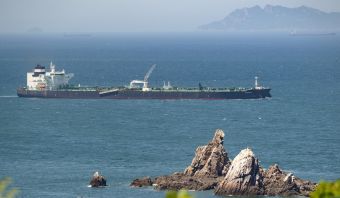
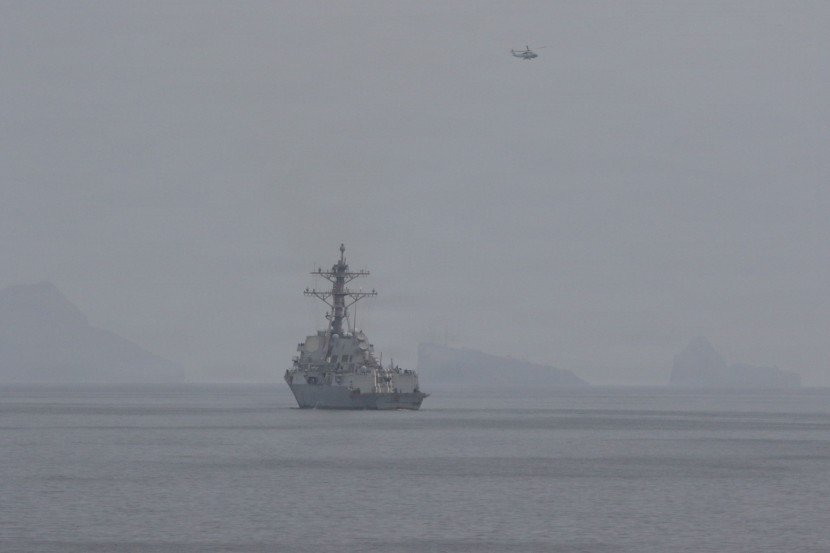
The diplomatic push continued against a backdrop of fighting. U.S. Central Command said it shot down several Iranian attack drones targeting commercial ships in the Strait of Hormuz early Saturday, and said its blockade of Iranian ports remained in effect. Trump called the drone launch unacceptable.
Key terms remained contested. Draft terms call for the U.S. to begin releasing billions of dollars in frozen Iranian assets and to ease sanctions on Iran's oil exports in return for reopening the strait, with Iran's nuclear program to be addressed during a 60-day period of talks. A U.S. official said the deal would reopen the strait, lift the blockade and lead Iran to surrender its enriched uranium, while Iranian state media said the current draft made no firm commitment on the nuclear program. Araghchi said Iran wants to keep charging ships a fee "for services rendered" to transit the strait — a toll the U.S. and others call a violation of international law — and declared Iran the winner of the war.
The war has already cost Iran its leader. Ayatollah Ali Khamenei, who ruled the Islamic Republic for more than three decades, was killed at age 86 in U.S. and Israeli strikes on Feb. 28, the first day of the conflict; a U.S. official said his son and successor, Mojtaba Khamenei, was "comfortable" with the state of the negotiations. After an initial state funeral was postponed, Iranian state media said Saturday that the funeral would begin in Tehran on July 4 and conclude with his burial in Mashhad on July 9.
Markets had already priced in hopes for an end to the war. U.S. crude futures closed Friday under $85 a barrel, among the lowest levels since the conflict began, after peaking above $110 in April. The disruption of traffic through the strait, a vital route for oil and natural gas, has driven up fuel prices and raised the cost of basic goods well beyond the region.
The 2026 Iran war began Feb. 28 after nuclear talks collapsed. An April 8 ceasefire frayed before fighting flared again this week, when the U.S. struck Iran on consecutive nights and Iran said it counterattacked U.S. targets at bases in Kuwait and Bahrain. Israel's prime minister has said his country would not be a party to the emerging agreement.
This is a developing story.
© 2026 HNGN, All rights reserved. Do not reproduce without permission.