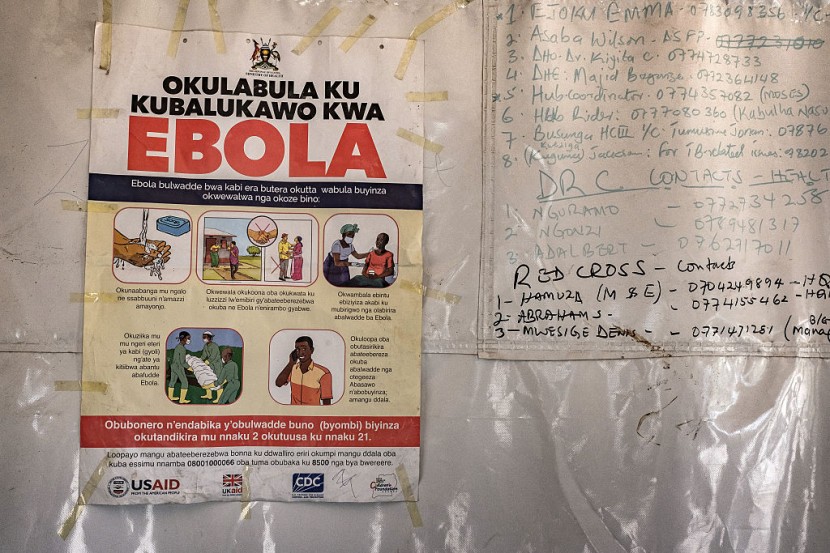
The World Health Organization has warned that the Ebola outbreak in the Democratic Republic of the Congo now poses a "very high" risk at the national level, with 82 confirmed cases and seven confirmed deaths.
WHO Director-General Tedros Adhanom Ghebreyesus announced in Geneva that the agency has raised its risk assessment for Congo from "high" to "very high," while keeping the risk "high" for regional spread and "low" at the global level.
He said the outbreak, driven by the Bundibugyo strain of the virus, is "spreading rapidly" and is likely larger than current confirmed figures suggest. Health officials report nearly 750 suspected cases and about 177 suspected deaths nationwide, according to Yahoo News.
The epicenter of the outbreak is Ituri province in eastern Congo, where cases have also been detected in major urban centers such as Bunia and Goma.
Authorities say the virus has spread into neighboring North Kivu province, heightening concern about transmission along busy trade and displacement routes. Two imported cases, including one death, have been confirmed in Uganda, although WHO describes the situation there as currently stable.
Congolese authorities have tightened public health measures, including bans on large gatherings and restrictions on traditional funeral wakes in parts of the northeast, to limit high-risk contact with bodies.
Local officials say these steps are necessary because burial practices have played a role in previous Ebola outbreaks in the region. However, the measures are being implemented in areas already destabilized by violence and mass displacement, complicating enforcement, Al Jazeera reported.
WHO and UN agencies are deploying emergency teams, laboratory supplies, and funding to support case detection, contact tracing, and infection prevention in health facilities.
Health workers on the ground report that more testing kits are being rushed to Ituri and North Kivu to confirm suspected infections quickly. The United Nations has released tens of millions of dollars to reinforce surveillance and treatment capacity, particularly in conflict-affected communities.
International health experts stress that there is no approved vaccine or specific treatment for the Bundibugyo Ebola strain, making rapid identification, isolation, and supportive care critical.
Neighboring countries are ramping up screening at border crossings and airports, even as international agencies maintain that the overall risk outside the region remains low. WHO says it will continue to update its risk assessment as more data emerge from Congo's health ministry and field investigations, as per US News.
© 2026 HNGN, All rights reserved. Do not reproduce without permission.