
Taylor Swift's Eras Tour grossed $2.2 billion. Kendrick Lamar's Super Bowl halftime show was watched by 133.5 million people. Coldplay sold 13.1 million concert tickets. These are the benchmarks that define modern music's biggest moments.
None of them come close to what may happen on July 19, 2026.
When BTS, Madonna, and Shakira take the stage at MetLife Stadium for FIFA's first-ever World Cup Final halftime show, they may perform in front of an audience approaching 1.5 billion viewers — the largest single audience ever assembled for a live music performance in the history of the medium.
The unprecedented event marks a new chapter in the evolution of live music, where global sporting spectacles are increasingly becoming the world's biggest stages for entertainment. And for the first time, one of those stages has a halftime show worthy of its audience.
By the Numbers
| Event | Audience / Attendance |
|---|---|
| FIFA World Cup Final (projected) | ~1.5 billion viewers |
| Super Bowl Halftime Show record (Kendrick Lamar, 2025) | 133.5 million viewers |
| Taylor Swift Eras Tour | 10 million attendees |
| Coldplay Music of the Spheres Tour | 13.1 million tickets sold |
| Coachella 2026 | ~250,000 attendees |
No concert, festival, or halftime show in modern music history has ever approached the audience scale of the FIFA World Cup Final.
The audience expected for the FIFA World Cup Final is more than 11 times larger than Kendrick Lamar's record-breaking Super Bowl halftime audience of 133.5 million. It is 150 times the attendance of Coachella. It is 150 times the number of people who watched the most-watched Super Bowl in U.S. television history.
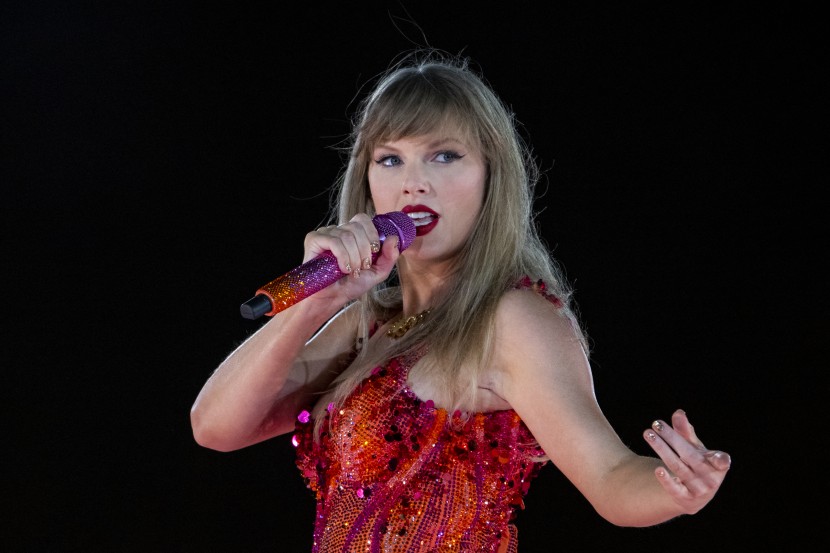
Taylor Swift: The $2.2 Billion Standard
Any conversation about music's biggest moments now starts with Taylor Swift — and for good reason. The Eras Tour is the financial benchmark every major music event is measured against.
Running from March 2023 to December 2024 across 149 shows and five continents, the Eras Tour grossed an estimated $2.2 billion — nearly doubling the previous all-time record held by Elton John's Farewell Yellow Brick Road Tour. It performed for over 10 million fans and generated an estimated $10 billion in total economic impact. The U.S. Travel Association found that Swift's tour functioned less like a concert and more like a force of nature, reshaping hotel markets, local economies, and airline routes in every city she visited.
The Eras Tour set the revenue standard. What it could not set was the audience standard. Taylor Swift performed for 10 million people across two years. On July 19, BTS, Madonna, and Shakira will perform for 150 times that many in eleven minutes.
The Super Bowl: The Previous Benchmark
For three decades, the Super Bowl halftime show was the undisputed crown jewel of music's biggest stages. Artists perform without a fee — and still consider it the most coveted 12 minutes in the industry, because of what follows.
Kendrick Lamar's 2025 Super Bowl LIX performance became the most-watched halftime show in history, drawing 133.5 million viewers — more than watched the game itself. Rihanna saw a 390% surge in catalog streaming in the 48 hours after her 2023 performance. The Super Bowl doesn't just reach audiences. It transforms careers.
But even the most-watched Super Bowl halftime performance in history reached an audience one-eleventh the size of what FIFA expects on July 19.
Madonna headlined the 2012 Super Bowl at Lucas Oil Stadium in Indianapolis. Shakira co-headlined in 2020 alongside Jennifer Lopez. Both women know exactly what a global stage feels like. On July 19, they will share one that is bigger than any stage either has ever stood on.
FIFA: A Different Scale Entirely
The numbers require a moment to absorb.
The 2022 World Cup Final between Argentina and France drew approximately 1.5 billion viewers — the largest single-event audience ever measured in the history of global broadcasting. FIFA president Gianni Infantino has described the World Cup's total scale this way: "A World Cup is 104 Super Bowls in a month."
For the first time in FIFA history, that audience will have a halftime show. Curated by Coldplay's Chris Martin and produced by Global Citizen in partnership with Live Nation, the show features three of the most globally recognized artists alive: Madonna (United States), Shakira (Colombia), and BTS (South Korea). Three continents. Four decades of pop culture. One stage. Eleven minutes.
The show also carries a purpose beyond spectacle. It supports the FIFA Global Citizen Education Fund, working to raise $100 million to expand access to quality education for children worldwide. Over $30 million has already been raised, with $1 from every FIFA World Cup 2026 ticket going directly to the fund.
"Music is the universal language of hope and harmony," BTS said in their announcement statement. Shakira, a board member of the education fund, added: "My hope is that on the world's biggest stage, the importance of investing in children's education steals the show."
Why This Moment Matters
The growth of live music's biggest stages follows a clear trajectory — and the driver isn't just ambition. It's economics and reach, feeding each other in an accelerating cycle.
Recorded music revenues reached $31.7 billion globally in 2025, according to IFPI. But the live business — tours, festivals, events — has become the industry's most powerful engine. Coldplay's Music of the Spheres World Tour concluded in late 2025 as the most-attended concert tour in history: 13.1 million tickets, $1.52 billion in gross revenue. Coachella generated over $200 million in ticket revenue in 2026, with a broader media impact value estimated at $908 million. The pattern is consistent: audiences are growing, production values are escalating, and the cultural stakes of each major performance keep rising.
FIFA's halftime show is the latest evolution — and potentially the largest leap yet.
The Moment That May Rewrite Everything
Whether measured by revenue, attendance, or sheer global reach, live music keeps growing beyond anything previous generations imagined.
Taylor Swift redefined what a concert tour could earn. Coldplay set new attendance records. The Super Bowl transformed halftime entertainment into a cultural institution. Kendrick Lamar made it the most-watched program in American television history.
Now FIFA is attempting something that none of them could: a music performance for the entire planet, simultaneously, at once.
If the projected audience holds, the World Cup Final halftime show will become the single most-watched musical performance in history — the moment where sports, entertainment, and global culture converge at an unprecedented scale. Three artists. 1.5 billion viewers. Eleven minutes.
Taylor Swift broke the revenue record. The question is whether BTS, Madonna, and Shakira are about to break the one that matters even more.
The FIFA World Cup 2026 Final Halftime Show takes place July 19 at MetLife Stadium in East Rutherford, New Jersey. Data sourced from Billboard Boxscore, Pollstar, IFPI Global Music Report 2026, Luminate 2025 Year-End Report, and FIFA official communications.
Originally published on Music Times